


Call Us
+86-19518020980
Email Us
chloe@kebonfirstaid.com

Home
>
Products > Military Tactical Backpacks
>
Tactical Chest Rig | Hands-Free Medical Gear Platform | Kebon
Products
Tactical Chest Rig | Hands-Free Medical Gear Platform | Kebon
Tactical Chest Rig
Trauma gear in your field of view — not on the floor, not in your pack.
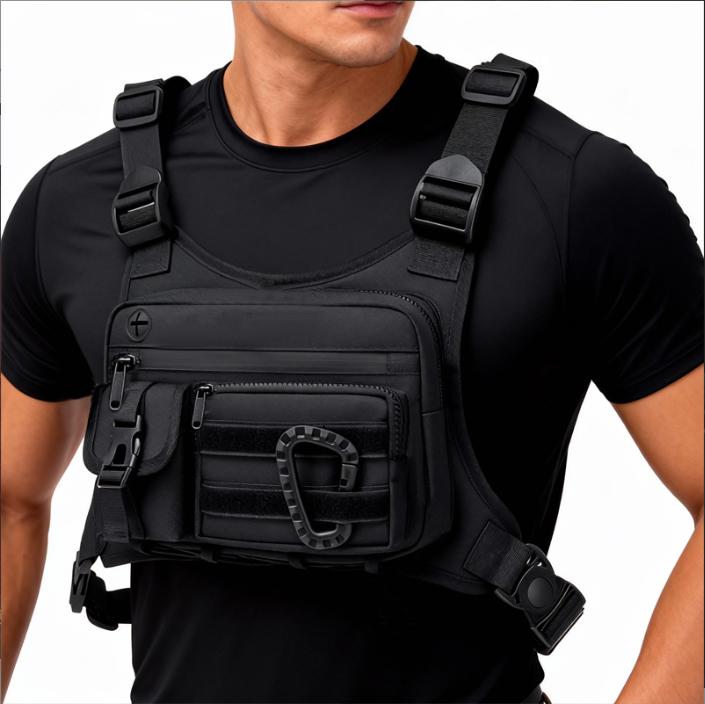
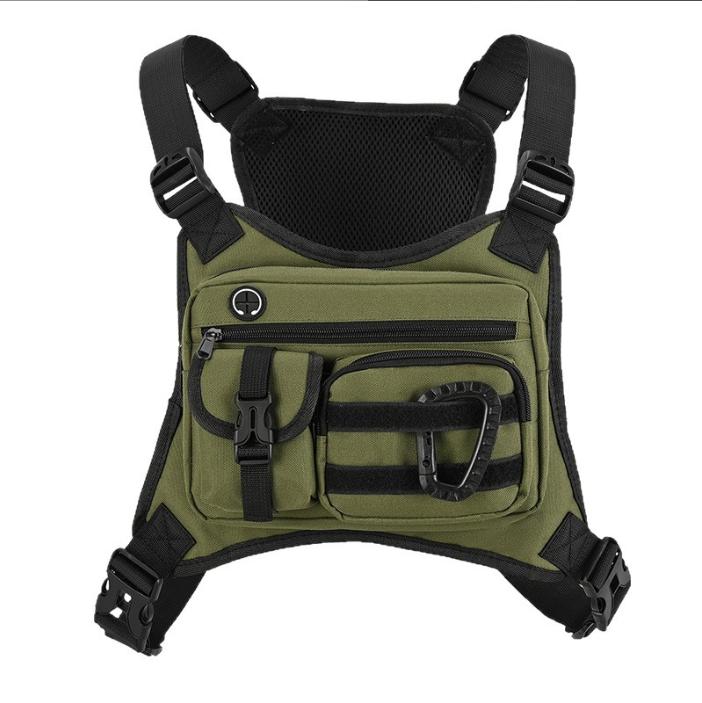
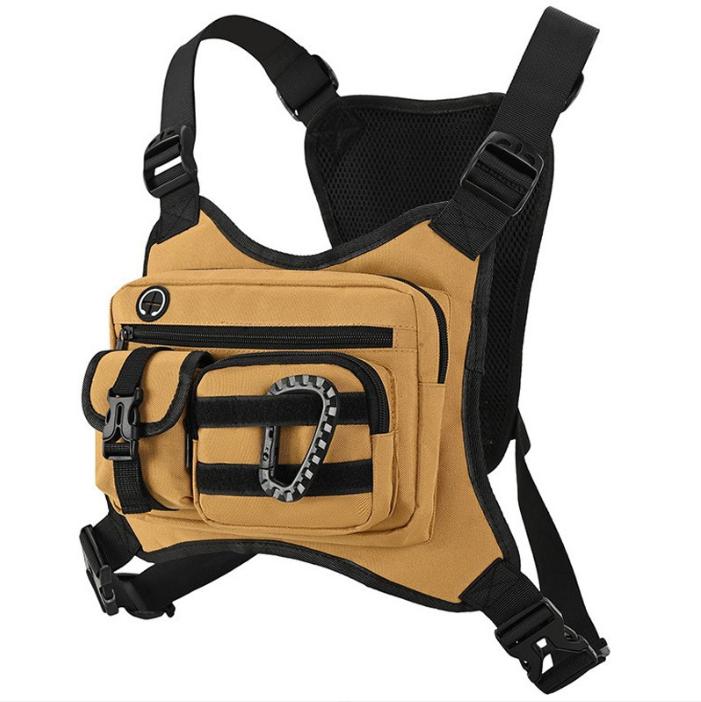
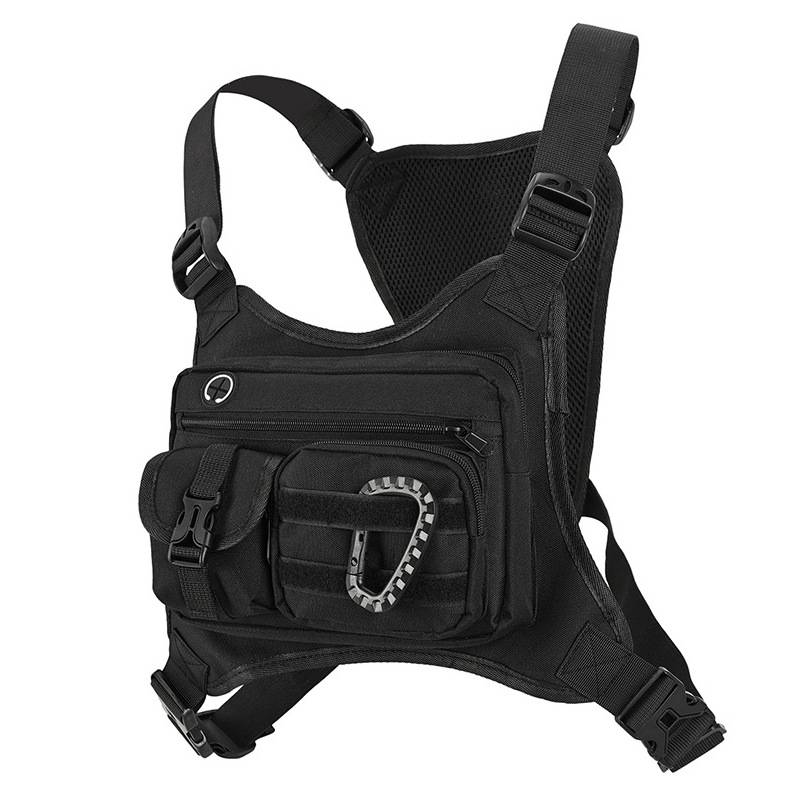
A 400 g chest-mounted platform built to carry IFAK and trauma supplies where your hands already work. Water-resistant Oxford shell, breathable back panel, MOLLE and Velcro mounting, quick-release buckles. Worn over a pack, not instead of one.
Request a Free Sample · Get Wholesale Pricing
400 g · Water-Resistant · MOLLE + Velcro · OEM / Private Label
color:
yellow/green/blackMOQ:
500pcs
Send Inquiry
Product Description
Tactical Chest Rig
Trauma gear in your field of view — not on the floor, not in your pack.
A 400 g chest-mounted platform built to carry IFAK and trauma supplies where your hands already work. Water-resistant Oxford shell, breathable back panel, MOLLE and Velcro mounting, quick-release buckles. Worn over a pack, not instead of one.
Request a Free Sample · Get Wholesale Pricing
400 g · Water-Resistant · MOLLE + Velcro · OEM / Private Label
The Kit That Belongs Where Your Hands Already Are
Watch someone treat a serious bleed and you will notice where their hands are: in front of their chest. That is the workspace. Everything a trauma kit has to offer has to arrive in that small rectangle — and a kit mounted anywhere else
has to be brought there first.
That is the case for a tactical chest rig. It puts the supplies where the work happens: inside your field of view, inside your reach, without asking you to unbuckle a pack, drop to a knee or look away from the casualty. In the first minute, looking down to search a hip pouch is the most expensive thing you can do.
Kebon builds this rig for people whose gear has to work while they do: first responders, search and rescue teams, hunters, trail runners, range staff, overlanding crews and medics carrying an IFAK. It is a carrying platform first and a bag second — which is why it holds its shape, sits flat against the chest and stays there when you run.
Key Features
Chest-Mounted, Inside Your Field of View
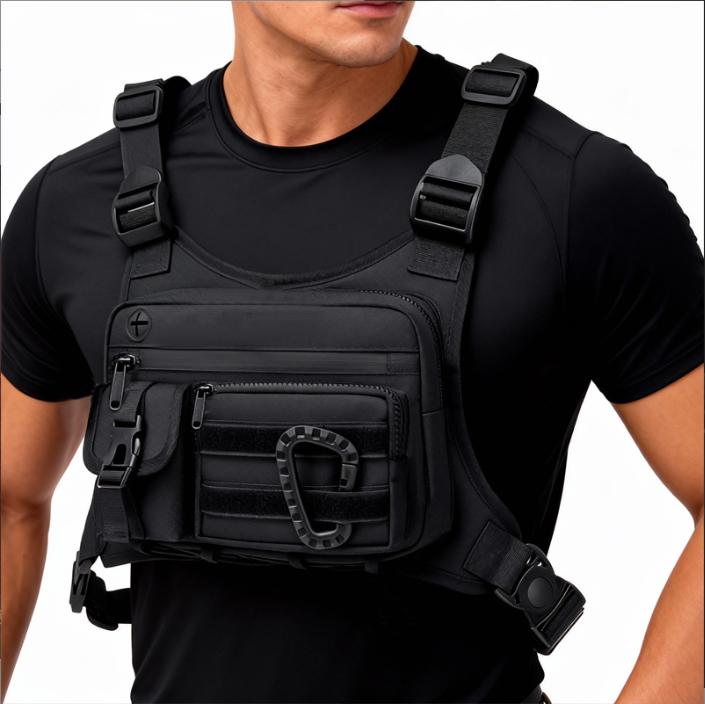
A hip pouch sits below your eye line; a backpack sits behind you. Both cost you a glance away from the casualty. Mounted on the sternum, this rig keeps the contents visible and reachable while you keep watching the patient. The main compartment opens flat, so the whole kit reads at once instead of one item at a time.
Worn Over a Pack, Not Instead of One
This is the practical advantage a waist pack cannot match. A hip belt fights with a backpack's own waist belt; a chest rig sits above the harness, on the sternum strap. That means you can carry a full expedition pack — or a rifle sling — and still have your trauma kit immediately accessible. Load also rides better: chest carry balances weight instead of adding to one side.
400 g, Breathable, and It Stays Put
At roughly 400 g the rig disappears on the body. A padded, breathable back panel keeps it comfortable against a shirt, and an elastic rear retention system pulls the load against the chest so it does not bounce or swing when you run. Four-point adjustable shoulder straps with quick-release buckles let it come off in one pull.
Multi-Compartment and Genuinely Modular
A main zippered compartment, a front quick-access zip pocket, a side mesh pocket and an internal organiser hold gear in fixed positions rather than one loose pile. The Velcro panel takes patches, name tapes and unit identifiers; MOLLE-style attachment points let you stack pouches onto the platform as the loadout grows. Elastic loops hold cylindrical items such as dressings and a tourniquet without rattling.
Water-Resistant Oxford Shell
The shell is woven nylon Oxford with a water-repellent finish and a polyester lining. Rain, spray and mud bead off rather than soaking through — which matters for the contents, because sterile dressings stop being sterile once they are wet. Reinforced stitching at the stress points keeps the corners intact through years of hard use.
Reflective Strip and Quick-Release Hardware
A reflective strip lifts visibility in low light — useful when the rig is worn on a night run or at a roadside incident. Quick-release buckles let you shed the rig in one motion without lifting it over your head, which is what you want if it is ever snagged or if you need to hand the kit to someone else.
OEM / Private Label Ready
Logo screen print, embroidery, woven labels, rubber patches, custom hangtags and retail packaging — all available from a MOQ of 500 units. Take the standard black, green or brown shell, or specify your own colour and camo. Printed patching, custom webbing and branded hardware can be quoted on request.
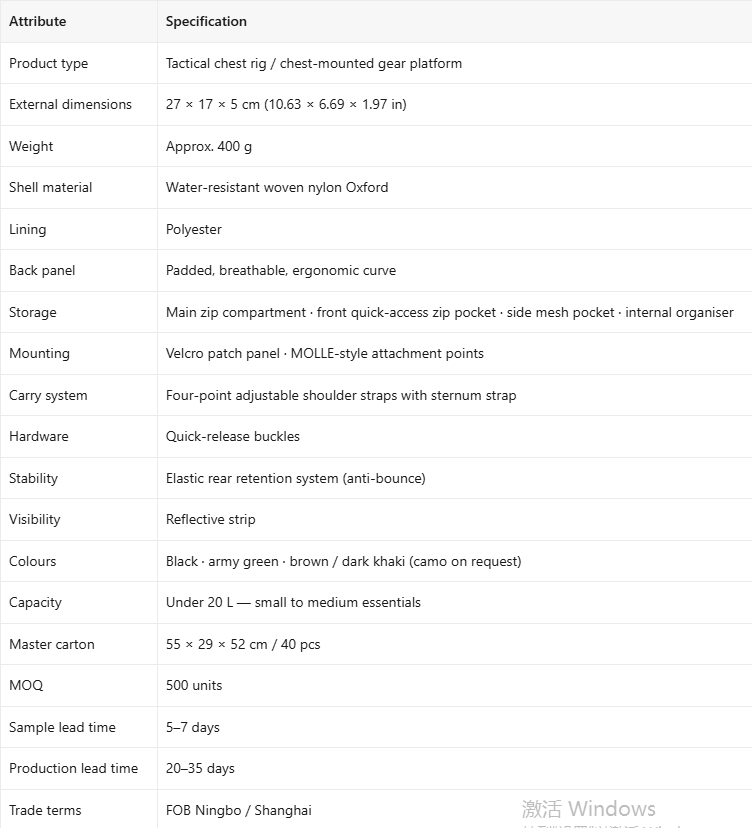
Specifications
What You Can Carry
Rig only: the empty platform, ready for your own loadout or your own retail configuration.
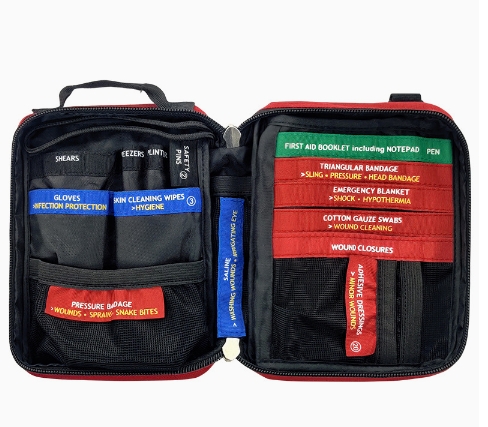
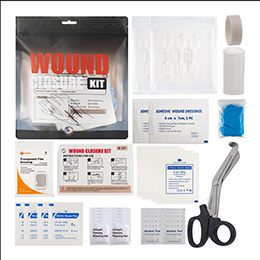
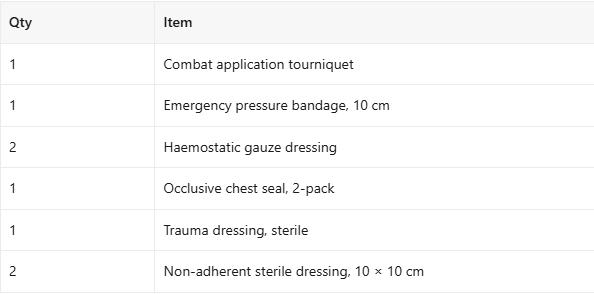
Example IFAK configuration: the rig has the internal volume for a focused trauma loadout of around 20 items.
Bleeding Control
Airway & Breathing

Tools & Documentation
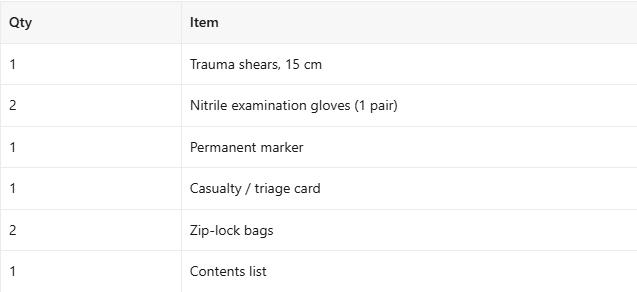
The configuration is agreed against your target market's medical device requirements — contact us to quote the rig alone or the rig with a fill.
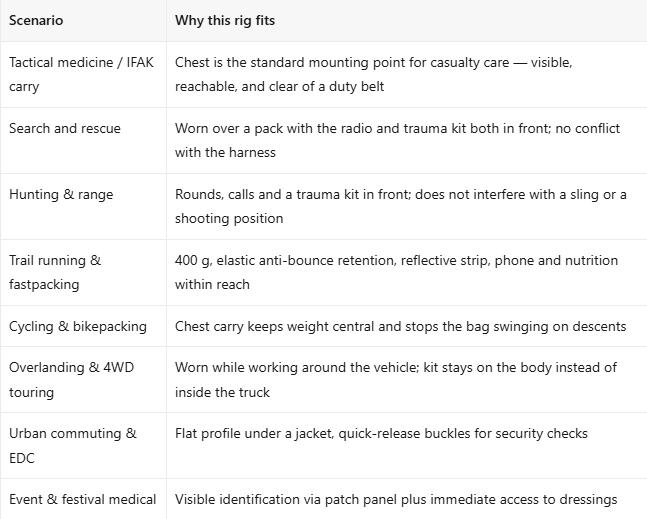
Application Scenarios
Compliance: Two Different Products, Two Different Rule Sets
This is a bag, not a medical device — and we do not present it as one. No CE marking is claimed and none is required, because a textile carrying platform does not fall within any EU CE-marking directive.
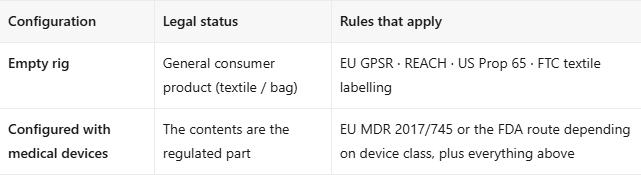
That distinction is the single most important thing to get right when importing a filled kit. An empty bag ships against product-safety rules; the moment you add a tourniquet or a haemostatic dressing, you are in medical device territory and the paperwork changes.
European Union — General Product Safety Regulation (EU) 2023/988
In force since 13 December 2024, replacing Directive 2001/95/EC, with no transition period.
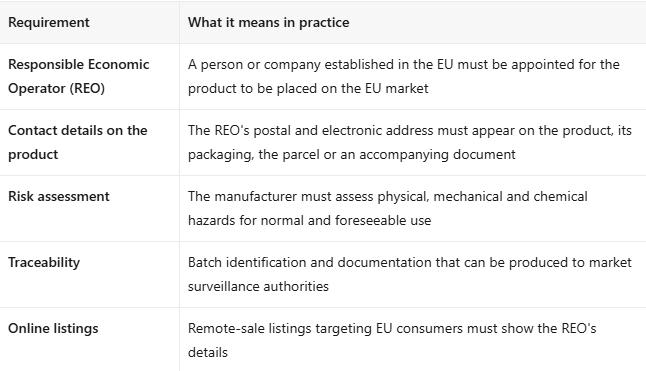 We supply the technical documentation package — material declarations, test reports and batch traceability — and work with your nominated EU representative.
European Union — REACH
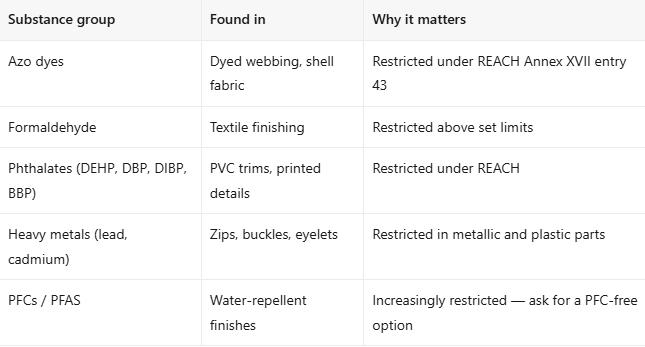
United States — California Proposition 65
Products sold in California must carry a warning if they expose users to chemicals on the Prop 65 list. For a bag, the practical exposures are lead and phthalates in trims and printed graphics. We will confirm the position for your specific configuration.
United States — FTC Textile and Wool Labelling
Textile products sold in the US require fibre content, country of origin and care instructions to be disclosed. Retail labels and online listings are drafted to match the actual shell and lining composition.
Why Choose Kebon
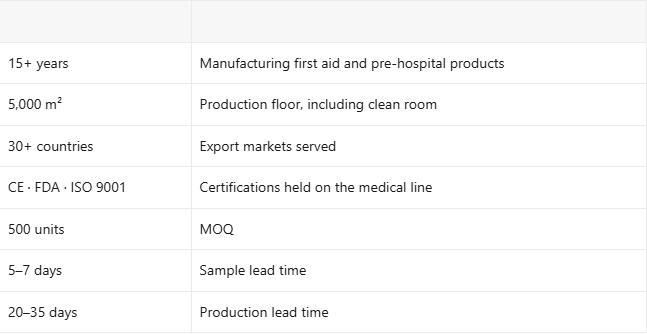
Yiwu Kebon Healthcare Co., Ltd. manufactures first aid kits and pre-hospital care products — we do not trade them. Our 5,000 m² facility is ISO 9001 certified and includes a dedicated clean production room for dressing assembly. Products carry CE marking and FDA registration, and we hold export experience across more than 30 countries in North America, Europe, the Middle East and Oceania.
Why that matters for a carrying platform: the rig is the container. What makes a carrier worth buying is what it has to hold — and Kebon has been specifying and filling medical kits for fifteen years. We can quote the rig alone, or the rig plus a fill designed around your market's device requirements.
Frequently Asked Questions
What is a tactical chest rig used for?
A chest rig is a carrying platform worn on the sternum. Tactically it was developed to keep ammunition, communications and medical gear within reach while leaving the back free for a pack. Today the same logic applies to IFAK and trauma carry, search and rescue, hunting, trail running, cycling and overlanding — anywhere you need gear accessible without taking anything off.
What is the difference between a chest rig and a chest pack?
The two terms overlap heavily and most buyers use them interchangeably. Strictly, a "rig" emphasises the harness and the modular mounting platform — webbing, Velcro, pouch attachment — while a "chest pack" emphasises the bag itself as a single sealed container. This product is both: a structured chest pack with MOLLE-style attachment points and a Velcro patch panel.
Can you wear a chest rig with a backpack?
Yes, and that is its main practical advantage over a waist pack. A hip-mounted kit competes with a backpack's own waist belt; a chest rig sits above the harness on the sternum strap, so the two coexist. The caveat is strap clearance: if your pack has a very high chest strap position, check the fit — with four-point adjustment the rig can be set higher or lower to suit.
How do you stop a chest pack from bouncing?
Three things do the work: a snug four-point harness rather than a single loop, an elastic retention system that pulls the load flat against the chest, and keeping the load light and low-profile. At roughly 400 g, a rig like this one does not have enough mass to swing. Overloading is the usual cause of bounce, not the harness.
What should go in an IFAK chest rig?
A focused trauma loadout rather than general household supplies: a tourniquet, an emergency pressure bandage, haemostatic gauze, a chest seal, sterile trauma and non-adherent dressings, a resuscitation face shield, a foil blanket, trauma shears, gloves, a marker and a casualty card. Roughly 20 items. Medicines are usually left out — they are the most heavily regulated category in most export markets and are best added locally by the buyer.
Is a chest rig better than a waist pack?
They solve different problems. A waist pack stays on the hip, which suits hiking, cycling and lone workers who need their hands free but not their line of sight. A chest rig puts the kit in the workspace — in your field of view, above a pack harness, clear of a duty belt — which suits trauma care, hunting and running. Many professional users carry both.
How do I know which size chest rig to buy?
This rig is a fixed size — 27 × 17 × 5 cm — sized for a small to medium essentials loadout of around 20 pieces. The variable is the harness, not the bag: four-point adjustable shoulder straps plus a sternum strap cover a wide range of body types. If you need more volume, the rig accepts additional MOLLE-mounted pouches rather than a larger bag.
Can I brand this chest rig with my own logo?
Yes. Logo screen print, embroidery, woven label, rubber patch, custom hangtag and retail packaging are all available from a MOQ of 500 units. Custom shell colours and camouflage patterns can be quoted on request. Contact us with your artwork and target market and we will return a spec and a price.
Ready to Build Your Own Chest Rig Line?
Whether you need the empty platform for your own loadout or a private-label rig with a fill built around your market, we can quote against your specification inside two working days.
Hot Tags: /tactical-chest-rig
Product Tag
Send Inquiry
Please feel free to fill your inquiry in the form below. We will reply you in 24 hours.
Related Products





X
We use cookies to offer you a better browsing experience, analyze site traffic and personalize content. By using this site, you agree to our use of cookies.
Privacy Policy
News
 US First Aid Kit Tariffs: The 9 November Exclusion Deadline2026/10/07
The US–China truce runs to 10 January 2027, but 178 Section 301 exclusions expire 9 November. What first aid kit importers must check now.
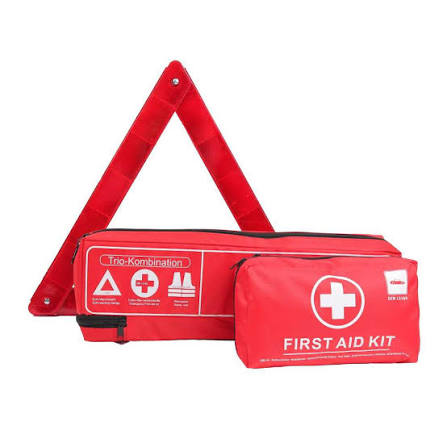 EU MDR First Aid Kits: Classes, EUDAMED and 2027 Car Rules2026/10/07
MDR classes explained for first aid kit importers: Class I, Is and IIa, the 2026 EUDAMED obligations, and the vehicle kit rules taking effect 1 January 2027.