


Call Us
+86-19518020980
Email Us
chloe@kebonfirstaid.com

US First Aid Kit Tariffs: The 9 November Exclusion Deadline
The 9 November Deadline: What US First Aid Kit Importers Must Do Before the Section 301 Exclusions Expire
If you import first aid kits into the United States, you have probably heard the good news: the trade truce with China has been extended to 10 January 2027. For a lot of importers that has been filed under "handled until next year".
That reading is wrong, and it is an expensive kind of wrong.
The truce extension and the product exclusions are governed by two different legal instruments with two different expiry dates. Extending one does not extend the other. As things stand, a substantial set of Section 301 China product exclusions expires on 9 November 2026 — and unlike the truce, that date does not move unless a fresh notice is published to move it.
This article separates the two clocks, explains the gap risk that caught importers out last time, and sets out what to check before your next purchase order — particularly if that order is timed around Black Friday.
1. Two clocks, not one
The arrangement announced in Busan was never a single document. It is a set of parallel actions by each government, each implemented through its own legal instrument, each with its own expiry. Two of them matter most to US importers of first aid kits and medical consumables:
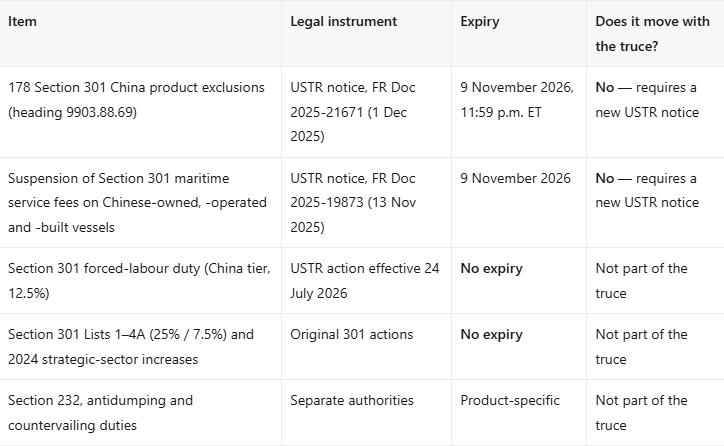 Read the table from the bottom up and the picture becomes clearer. Most of the duty burden on Chinese-origin goods was never part of the truce at all. The truce deals with a specific set of suspended measures. The structural duties — including the 25% and 7.5% lists and the newer forced-labour layer — sit outside it entirely.
The legal landscape also shifted in 2026. Following the US Supreme Court's February 2026 decision on tariffs imposed under the International Emergency Economic Powers Act, the administration rebuilt its China duties under Section 301. That matters because it means the live instruments for an importer are now the exclusion notice and the ship-fee notice — and both currently expire on 9 November.
2. The lesson from last time: a one-day gap with no refund
Here is the part that should change how you plan.
The previous exclusion extension was framed as part of the trade and economic arrangement with China, and the leading expectation is that Washington will publish a further extension — most likely aligning the exclusions with the truce date of 10 January 2027. That is a reasonable base case.
But base cases are not guarantees, and the mechanics of the last extension is the detail worth remembering: the previous extension was published on 1 December 2025, after the prior expiry date had already passed, leaving a one-day gap.
If that pattern repeats, entries filed during the gap pay the full list rate. And critically — there is no automatic refund when the extension arrives afterwards. The extension is not retroactive by default. The duty paid at entry is the duty paid.
For an importer of first aid kits shipping in volume, a one-day gap can land on a single consolidated shipment and turn a planned margin into a loss. The mitigation is not complicated; it is just easy to forget:
*Know your sailing and entry dates before you book, not after.
*Avoid scheduling entries to fall in the 1–10 November window if it can be avoided, precisely because that is where the uncertainty sits.
*Ask your broker to flag the exposure in writing, so the decision is documented rather than assumed.
*Keep the possibility of a short gap in your landed-cost model, rather than pricing on the assumption that the extension will land on time.
An exclusion extension is the base case. It is not a certainty, and the last one did not arrive early.
3. The 12.5% forced-labour duty has no expiry date
It is worth being blunt about this one, because it is frequently conflated with the truce.
The Section 301 forced-labour action took effect on 24 July 2026, imposing an additional 12.5% on Chinese-origin goods. It has no expiry date. Nothing in the truce announcement addresses it.
The action followed USTR's June finding that all 60 economies under investigation for treatment of imports produced with forced labour had failed to ban or enforce bans. The proposed additional duties covered 45 economies at 12.5% — including China, Malaysia, Vietnam and Thailand — and 15 others at 10%.
For a first aid kit importer, the practical consequence is this: relocating production to another Asian country does not remove all of the pressure. Vietnam and Thailand sit in the same 12.5% tier. Country substitution remains a legitimate strategy, but it should be modelled with the correct rate attached, and it needs to account for the fact that Section 301 duties can stack on top of Most-Favoured-Nation rates and older China 301 duties depending on the HTS line.
4. The 7.5% tariff that has not landed yet
There is a third clock running that has not been formally announced.
A Section 301 structural excess-capacity investigation remains open. Before the truce announcement, the reported plan was an additional 7.5% duty on Chinese goods which — combined with the 12.5% forced-labour layer — would fill the roughly 20% ceiling on new duties that both sides have described as consistent with the arrangement. That announcement was reportedly held back pending the summit.
Nothing announced so far addresses the excess-capacity determination. It may never proceed. But if it does, an importer who modelled only the 12.5% will be short by 7.5 percentage points on every entry — and first aid kits ship in volumes where that is a material number.
Want a component-level view of how your kit configuration lands under the current duty stack? Send us your product list — we will return a bill-of-materials breakdown with suggested HS headings you can hand straight to your customs broker.
5. Why medical supplies stayed off the reduction list
For anyone hoping that the trade arrangement would ease pressure on medical imports, one recent development is worth understanding.
The US–China Board of Trade published its first "30-for-30" list of goods set for reduced tariffs — and personal protective equipment and critical medical supplies were deliberately excluded. The exclusion was welcomed by the American Medical Manufacturers Association, whose position is that masks, gloves, gowns and syringes are national security goods and should not be made easier to source from China. The association notes that roughly 80 to 90 percent of US PPE already comes from abroad.
There is a second-order effect worth watching. In June, USTR found that all 60 economies in its forced-labour investigations had failed to ban or enforce bans on imports made with forced labour. Several of the economies proposed for additional duties — Malaysia, Vietnam, Thailand — are major suppliers of N95 respirators, surgical masks, nitrile gloves and medical gowns. In other words, the tariff pressure on the broader medical supply category is diffusion across source countries rather than disappearing.
For first aid kits specifically, the position is more nuanced than the headlines suggest. A kit is a combination of components classified under different headings, and duty treatment follows the classification of each component. That is why "what tariff does a first aid kit pay" has no single answer — and why the composition of your bill of materials is a duty-planning document.
6. A line-by-line checklist before your next purchase order
If a Black Friday or Q4 reorder is coming up, these are the checks worth doing now rather than in November:
1. Get the full Chapter 99 stack for every HTS line, not an average. Trade-weighted average tariff figures published by research organisations describe broad categories of goods. They are not a schedule you can apply to a product. The actual rate begins with the HTSUS classification, then adds MFN duty, older Section 301 duties, the new forced-labour duty, and anything else that applies to that line.
2. Check whether the entry qualifies for an exemption. The primary sources support exemptions for USMCA-qualifying goods, articles subject to Section 232 tariffs, pharmaceuticals, civil aircraft and parts, humanitarian donations, informational materials and Chapter 98 entries, plus product-specific exclusions listed in the annexes. Adding 12.5% to a line that is already exempt overprices your product. The reverse error — assuming an exemption you cannot document — is worse.
3. Verify the origin claim behind the classification. Country of origin is not the same as country of shipment. If your supplier assembles from imported components, the origin determination has its own rules.
4. Confirm your bond and cash flow can absorb a duty increase. A 12.5% swing on a large Q4 programme is a working-capital event, not just an accounting one.
5. Put the 1–10 November window into your shipping plan deliberately. Choose to either clear before it or accept the exposure knowingly.
6. Get the position from your broker in writing, and date it. Tariff treatment in this environment has a shelf life measured in weeks.
Planning your Q4 and Q1 programmes now? Tell us your destination market, kit configuration and volumes and we will provide a component-level bill of materials with suggested HS headings, so your broker is working from an accurate starting point rather than a guess.
7. How we support US-bound programmes
At Yiwu Kebon Healthcare, we manufacture first aid kits for US-bound programmes across workplace, consumer and tactical scenarios — from home and industrial first aid kits and workplace kits to trauma platforms built on our military tactical backpack lines.
Because duty treatment follows the components rather than the finished carton, the useful thing a factory can provide is not a single duty number — it is an accurate bill of materials with the origin and material composition of each line documented. That is what we supply alongside a quotation for US-bound orders, so your customs broker is classifying from real data instead of a catalogue photo.
Our factory holds ISO 13485, CE, FDA and UKCA certification, operates at roughly 100 staff across 5,000 m², and works to a MOQ of 500 with a standard lead time of around 30 days. For Q4 and Q1 programmes, we also publish a factory holiday calendar covering the Chinese New Year window, because duty planning and delivery planning fail in the same quarter when they are handled separately.
8. Frequently asked questions
If the truce runs to 10 January 2027, are my exclusions extended too?
Not automatically. The 178 Section 301 China product exclusions under heading 9903.88.69 currently expire on 9 November 2026 and require a separate USTR notice to be extended. An extension is widely expected but had not been published as of early October 2026.
What happens if there is a gap between expiry and extension?
Entries filed during the gap pay the full list rate, and the extension is not retroactive by default — so there is no automatic refund. The previous extension was published after the prior expiry date, leaving a one-day gap.
Is the 12.5% forced-labour duty part of the truce?
No. It took effect on 24 July 2026 and has no expiry date. Nothing in the truce announcement addresses it.
Could there be another increase on top?
The Section 301 structural excess-capacity investigation remains open. Before the summit, a 7.5% additional duty was reported to be under consideration, which combined with the 12.5% forced-labour layer would approach a 20% ceiling on new duties. It has not been announced, but it has not been withdrawn either.
Did first aid kits get relief from the tariff reduction list?
The US–China Board of Trade's first "30-for-30" list left PPE and critical medical supplies off the goods set for reduced tariffs. For first aid kits, treatment depends on the classification of each component — which is why the bill of materials matters more than the category name.
What should we do this month?
Get the full Chapter 99 stack for every HTS line from your broker, in writing and dated; check exemption eligibility line by line rather than in aggregate; and decide deliberately how you will handle entries falling in the 1–10 November window.
Get a quote within 24 hours → Send us your target market, kit configuration and order size, and we will return pricing together with a component-level bill of materials and suggested HS headings your broker can work from. MOQ 500, ~30-day production, certificates included. You can also reach our team through our contact page.
Further reading
**Importing First Aid Kits from China in 2026: US Tariffs, Exemptions, and What Actually Changed
**ANSI/ISEA Z308.1-2026 Published: What Importers Must Change
**EU MDR First Aid Kits: Classes, EUDAMED and 2027 Car Rules — publishing shortly
Shop the range
**Home & Industrial First Aid Kits · Military Tactical Backpacks · First Aid Boxes
Send Inquiry



X
We use cookies to offer you a better browsing experience, analyze site traffic and personalize content. By using this site, you agree to our use of cookies.
Privacy Policy
News
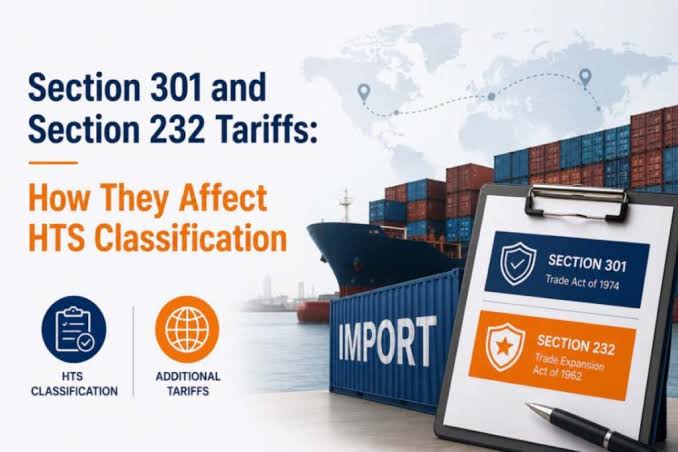 US First Aid Kit Tariffs: The 9 November Exclusion Deadline2026/10/07
The US–China truce runs to 10 January 2027, but 178 Section 301 exclusions expire 9 November. What first aid kit importers must check now.
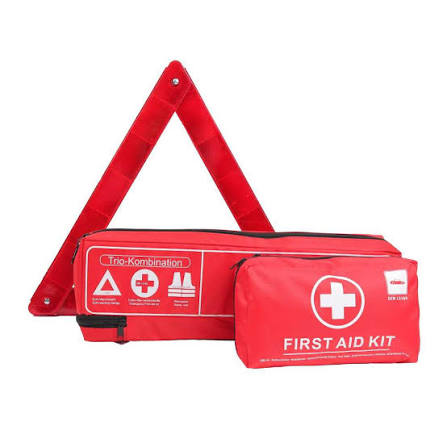 EU MDR First Aid Kits: Classes, EUDAMED and 2027 Car Rules2026/10/07
MDR classes explained for first aid kit importers: Class I, Is and IIa, the 2026 EUDAMED obligations, and the vehicle kit rules taking effect 1 January 2027.