


Call Us
+86-19518020980
Email Us
chloe@kebonfirstaid.com

UK HSE Bleeding Control: What Changes for First Aid Kits(58)
UK HSE Has Changed the Bleeding Control Conversation: What It Means for First Aid Kit Suppliers
Something quietly significant happened to UK workplace first aid guidance this autumn, and most of the coverage missed it because it did not come with a new regulation, a commencement date, or a headline number.
The Health and Safety Executive updated the guidance that supports the Health and Safety (First Aid) Regulations 1981. Among the changes, one is deceptively large: the language moved from "catastrophic bleeding" to "life-threatening bleeding."
That sounds like editorial tidying. It is not. It resets the test that UK employers are now expected to apply when they assess what belongs in a workplace first aid kit — and by extension, it changes what importers and distributors should be stocking.
Here is what actually changed, why the wording matters so much, and what it means for the kits you sell into the UK.
1. Why a change of wording changes the requirement
"Catastrophic bleeding" was always a clinical-sounding term that employers struggled to map onto their own premises. It implied something beyond the ordinary — a major incident, an industrial accident, a mass casualty event. Many employers read it, decided it described somebody else's workplace, and moved on.
"Life-threatening bleeding" describes a physiological state rather than an incident type. A severed artery from a workshop tool, a chainsaw injury in forestry, a fall onto machinery, a laceration in a remote location far from an ambulance — these are not catastrophes. They are ordinary industrial injuries that become fatal within minutes if nothing is done.
The guidance now directs employers to examine historical accident records and routine working conditions during their statutory first aid needs assessment. That is a materially different instruction from "consider whether a catastrophic event is possible." It asks an employer to look at what has actually happened, and what routinely happens, and to reason forward from there.
For sectors where severe lacerations or traumatic vessel damage are plausible — agriculture, forestry, heavy manufacturing, construction, and remote operations are the ones the guidance singles out — the updated position is unambiguous: a standard workplace first aid kit is no longer considered sufficient on its own.
2. What employers are now expected to hold
Where a needs assessment identifies a credible risk of life-threatening bleeding, the updated guidance sets out supplies that go beyond plasters and bandages:
*Haemostatic dressings — dressings containing an agent that promotes clotting
*Wound-packing gauze — for controlling bleeding from a wound that cannot be compressed externally
*Commercially manufactured tourniquets — purpose-built devices, not improvised bands
Three things about that list deserve attention from anyone supplying this market.
First, these are not commodities. A haemostatic dressing is a regulated medical device with a specific mechanism, a shelf life, and a documented performance profile. A tourniquet is a device where the difference between a compliant product and an ineffective copy is the difference between a saved limb and a lost life. The American standard has already begun naming counterfeit tourniquets as an active workplace hazard; the UK guidance pushes buyers toward the same scrutiny.
Second, they have expiry dates and storage conditions. Adding bleeding control to a kit changes the replenishment regime, not just the bill of materials. A kit containing an expired haemostatic dressing is not a compliant kit; it is a kit with a hidden failure mode.
Third, they change the kit's physical design. A windlass tourniquet is not a flat item. It needs a compartment, a visible location, and a layout that lets someone find it by touch under pressure. Kits designed before bleeding control was a category frequently cannot accommodate it without the contents spilling into each other.
3. The training clause is the part suppliers underestimate
The guidance does not stop at equipment. It states that designated first aiders must receive specific practical instruction on these devices within their Emergency First Aid at Work (EFAW) or First Aid at Work (FAW) courses, where the risk assessment identifies a bleeding hazard.
The practical consequence, spelled out plainly: standard first aid certificates that omit practical trauma training may leave an organisation non-compliant if its risk profile demands advanced bleeding control measures.
This matters commercially for a reason that has nothing to do with training providers. It ties the equipment decision to a documented, auditable process. An employer who buys bleeding control supplies without the training cannot demonstrate the pairing the guidance now describes. An employer who books training and has nothing to train on has the reverse problem.
That pairing — supply plus documentation plus training-readiness — is the shape of the market that is forming.
Supplying UK workplace accounts and not sure your bleeding control contents meet the updated guidance? Send us your current contents list and we will review it device by device against the categories the guidance now names.
4. BS 8599-1:2019+A1:2026 and the myth of "HSE approved"
A parallel development has been getting more attention than the HSE wording change, and it is worth getting straight because the two are often confused.
BS 8599-1, the British standard for workplace first aid kits, was amended in April 2026 (BS 8599-1:2019+A1:2026). The amendment is substantive:
*AEDs entered the scope of the standard for the first time. For sites with five or more people, the standard now addresses defibrillator provision, with access expected within two minutes.
*New kit categories were added — including critical injury packs, personal issue packs, burn packs and eye wash packs.
*The travel kit was renamed, and quantity adjustments were made across the small, medium and large kit sizes.
*Tablets remain prohibited in first aid kits, with one exception: aspirin for a suspected heart attack.
And now the part that causes most confusion in tender conversations:
BS 8599 is not legally mandatory. Neither, for that matter, is any specific product list. The Health and Safety (First Aid) Regulations 1981 require suitable and sufficient provision, assessed by the employer. What BS 8599 does is give a court, an inspector and a buyer a benchmark for what "suitable and sufficient" looks like in practice. Ignoring it is legal. Explaining why you ignored it after an incident is not a comfortable position.
Which brings us to a claim you will still see in supplier brochures and product pages: "HSE approved."
There is no such thing. The HSE has not approved first aid products or first aid training providers since October 2013. Any supplier using that phrase is either working from an outdated template or is misrepresenting their status. If you are auditing your own marketing copy, that is a phrase worth searching for and removing.
5. The three-market pattern nobody planned
The UK change did not happen in isolation, and this is the part that should shape a product strategy rather than just a single order.
Within roughly eighteen months, three major English-speaking markets have moved bleeding control from a specialist add-on toward a baseline expectation:
*Canada's CSA Z1220-24 made a windlass tourniquet mandatory in Type 2 and Type 3 workplace kits.
*ANSI/ISEA Z308.1-2026, published on 17 September 2026, tightened tourniquet specifications, explicitly distinguished arterial tourniquets from ineffective elastic bands, and flagged counterfeit devices as an active workplace concern.
*UK HSE has now reframed the risk assessment around life-threatening bleeding and named haemostatic dressings, packing gauze and manufactured tourniquets as the supplies that follow.
Three regulators, three different legal systems, one shared conclusion: bleeding control is becoming baseline specification, not specialist equipment.
For a supplier, the strategic read is straightforward. A product range that treats a tourniquet as an optional line item bolted onto a legacy kit design will increasingly lose tenders to one that was designed around it. The winners in this transition are the suppliers whose kits already have a bleeding control compartment, whose device documentation is complete, and whose contents lists match what the box actually contains.
There is one caution worth stating, because it is the expensive mistake in this space. Bleeding control components can change your device classification in the European Union. Under the MDR, an assembled kit takes the highest risk class of any component inside it, and trauma components with sterile dressings can push a kit out of the Class I self-declaration route into Notified Body assessment.
We wrote about that trap in detail here: EU MDR First Aid Kits: Classes, EUDAMED and 2027 Car Rules.
A supplier who can serve both markets — meeting UK and North American bleeding control expectations while keeping a European configuration on the route its documentation actually supports — is a materially different proposition from one who discovers the difference at the border.
6. What to check on your own range this quarter
If you distribute into the UK, five checks are worth running now, before the Q1 tender season.
Audit your tourniquet sourcing. Identify the actual device in every kit that contains one. Get manufacturer documentation, not a supplier's assurance. If a kit contains an unbranded elastic band described as a tourniquet, that is a liability with a shelf life.
Check the contents list against the box. The most common failure we see in this category is not a missing product — it is a contents list that was written before a component was substituted. Buyers are about to start reading these lists closely.
Verify expiry management. Haemostatic dressings and sterile trauma components expire. A kit sold with short-dated stock creates a replacement obligation within months and a complaint within weeks.
Review the case design. Can a tourniquet be stored without deforming the packaging? Is it visible and identifiable? Can someone find it in the dark, under stress, without emptying the kit?
Audit your own marketing claims. "HSE approved" should not appear anywhere. Neither should "catastrophic bleeding kit" if you are describing a product to the updated guidance — the terminology has moved, and matching it signals that you are current.
Building a bleeding-control range for the UK and North American markets? Tell us your target markets and kit configurations and we will return a component-level contents list, the device documentation behind each trauma item, and an honest production date.
7. How Kebon supports UK-bound programmes
We manufacture first aid kits and trauma configurations for importers and distributors across the UK, Europe, North America and the Middle East. Our factory holds ISO 13485, CE, FDA and UKCA certification, operates at roughly 100 staff across 5,000 m², and works to a MOQ of 500 with a standard lead time of around 30 days.
What that means in practice for a UK programme:
*Component-level contents lists in the format a buyer's compliance team needs, rather than a marketing description of the kit
*Bleeding control configurations built as a designed category — with compartment layouts that hold a tourniquet, packing gauze and haemostatic dressings accessibly, not crammed into leftover space
*Batch traceability and expiry control on regulated consumables, because a kit's useful life is set by its shortest-dated component
*Label and insert production as a standard manufacturing step, so guidance and contents documentation change with the configuration rather than lagging behind it
*A broad product matrix across the categories UK distributors assemble programmes from: workplace medical first aid kits, industrial first aid kits, advanced wound closure kits, outdoor first aid kits and medical consumables for the refill programmes that follow every replacement cycle
One thing we will not do is quote a bleeding-control configuration without telling you what it does to your regulatory position in your target market. That is a cheap conversation at quotation and an expensive one at the port.
Get a quote within 24 hours → Send us your target market, kit configuration and order size, and we will return pricing with a component-level bill of materials and the device documentation behind each regulated item. MOQ 500, ~30-day production, certificates included. You can also reach our team through our contact page.
Frequently asked questions
Is bleeding control now a legal requirement in the UK?
No. The Health and Safety (First Aid) Regulations 1981 are unchanged, and they require suitable and sufficient provision rather than a specific product list. What changed is the guidance that supports those regulations, and guidance is what an inspector and a court use to judge whether provision was suitable. In practice, employers with a credible bleeding risk will find it difficult to justify a standard kit without bleeding control supplies.
Why did HSE change "catastrophic bleeding" to "life-threatening bleeding"?
The new term describes a physiological state rather than an incident type. It directs employers to consider ordinary industrial injuries that become fatal within minutes — a severed artery from a tool, a forestry injury, a remote-site laceration — rather than an event most employers assume could never happen on their premises.
Do our kits need to hold a tourniquet to comply?
Not automatically. It depends on the employer's needs assessment and their hazard profile. Sectors the guidance singles out — agriculture, forestry, heavy manufacturing, construction, remote operations — will find it hard to argue a tourniquet is unnecessary. Conversely, stocking one does not discharge the obligation; the employer still has to assess, train and maintain.
Is ANSI/ISEA Z308.1-2026 relevant to UK sales?
It is not a UK requirement, but it is increasingly relevant commercially. Multi-market buyers are aligning specifications, and the American standard's language on arterial versus ineffective tourniquets and on counterfeit devices is influencing how procurement teams everywhere frame the question. A supplier who understands both frameworks is easier to keep.
What does "HSE approved" mean?
Nothing. The HSE has not approved first aid products or training providers since October 2013. If a supplier or a product page claims HSE approval, treat it as evidence that the rest of the page needs checking too.
Should we add an AED to UK workplace kits?
The amendment to BS 8599-1 brings AEDs into scope for the first time, addressing sites with five or more people and expecting access within two minutes. AEDs are not part of the kit contents — they are a separate device with its own maintenance regime — but the standard now expects the two to be planned together. Suppliers who can coordinate both are easier to buy from than those who only sell a box.
This article describes UK guidance and standards as of October 2026 and is intended as commercial guidance for suppliers and distributors, not as legal or compliance advice. Employers should confirm their obligations against current HSE guidance and any applicable sector requirements.
Further reading:
*Selling First Aid Kits in the UK in 2026: CE, UKCA and What the New MHRA Reforms Mean for Importers
*ANSI/ISEA Z308.1-2026 Published: What Importers Must Change
*Canada Federal First Aid Kit Rules: CSA Z1220 Proposal
*EU MDR First Aid Kits: Classes, EUDAMED and 2027 Car Rules
*Workplace medical first aid kits · Industrial first aid kits · Advanced wound closure kits
Send Inquiry




X
We use cookies to offer you a better browsing experience, analyze site traffic and personalize content. By using this site, you agree to our use of cookies.
Privacy Policy
News
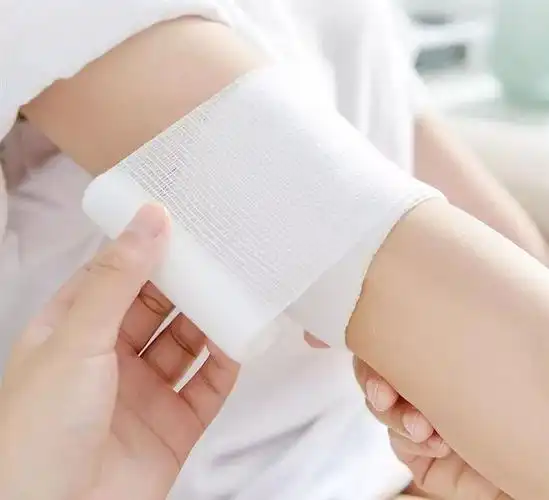 UK HSE Bleeding Control: What Changes for First Aid Kits(58)2026/10/27
HSE now asks UK employers to assess life-threatening bleeding risk and stock haemostatic dressings, packing gauze and tourniquets. What suppliers must change.
 UAE Medical Device Registration: MOHAP to EDE Explained(54)2026/10/27
The UAE's federal device marketing authorisation moved from MOHAP to the Emirates Drug Establishment. What importers and brands must check before their next shipment.