


Call Us
+86-19518020980
Email Us
chloe@kebonfirstaid.com

Canada's CSA Z1220-24: What Changed for First Aid Kits
Canada's Updated CSA Z1220 Standard: What Changed for Workplace First Aid Kits in 2026
Canada has quietly completed one of the biggest updates to workplace first aid requirements in a decade — and a lot of businesses, distributors and importers have not caught up yet.
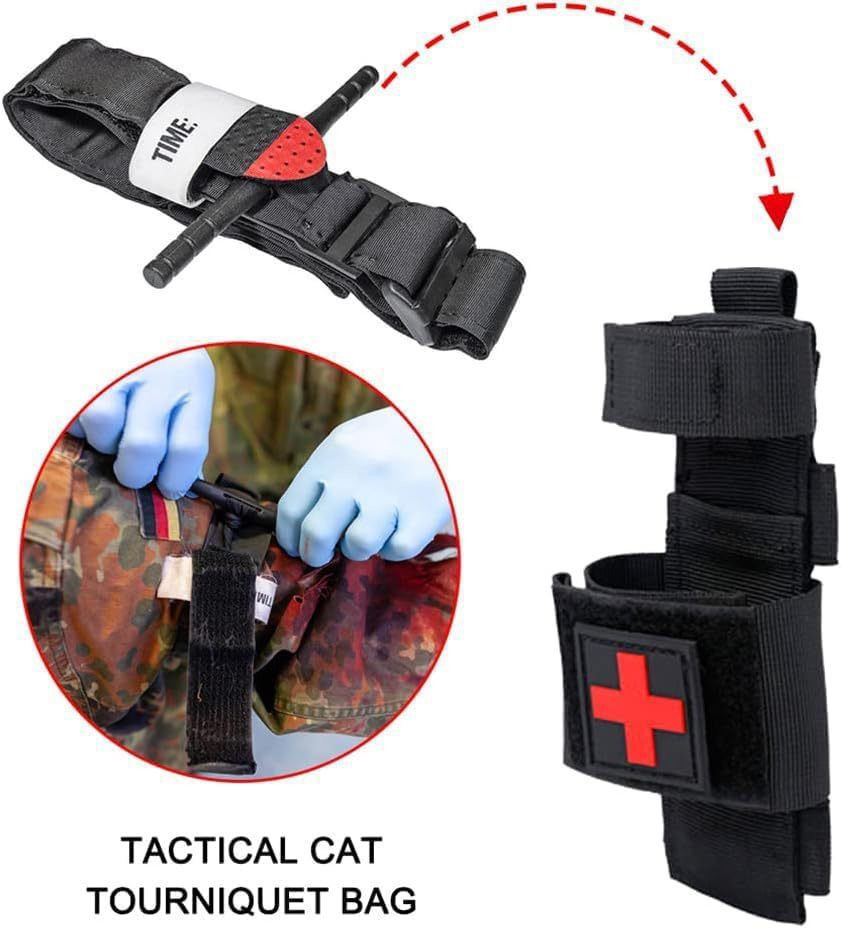
The CSA Z1220 standard for workplace first aid kits has moved to its 2024 edition, and the grace period for the previous version has closed. The change that matters most is also the one easiest to summarise: a windlass-style arterial tourniquet is now mandatory in Type 2 and Type 3 workplace kits. Under the old standard, a mechanical tourniquet was optional or reserved for high-risk configurations. A simple rubber strap used to satisfy the requirement. It no longer does.
For anyone importing or distributing first aid kits into Canada, this is not a footnote. It is a restocking event, a SKU redesign, and a sales opportunity — all at once. Here is what actually changed, and what to do about it.1. CSA Z1220 in one minuteIf you sell into North America, you probably know the US framework: OSHA's requirement that supplies be "adequate," filled in by ANSI/ISEA Z308.1 with its Class A and Class B kits. Canada runs a parallel but separate system, and confusing the two is one of the most common mistakes we see from overseas suppliers.
CSA Z1220 organises workplace kits into three types:Type 1 — Personal. For a single worker who is isolated or without access to a workplace kit: mobile crews, lone technicians, drivers, remote workers.Type 2 — Basic. The standard kit for low-risk environments such as offices, retail and light administrative work.Type 3 — Intermediate. For moderate and higher-risk settings: construction, manufacturing, heavy industry, forestry — anywhere workers need hard hats, safety glasses and cut-resistant gloves to do the job.Types 2 and 3 are then sized — small, medium or large — based on the maximum number of workers present on a single shift, not the total headcount. A workplace with three shifts does not multiply its kit requirement by three; it sizes to the busiest shift.
The critical point for importers: a kit built to the US ANSI Class A/B framework is not automatically a CSA Z1220 kit. The contents lists, quantities and type structure differ. If your product line treats "North America" as one market, the 2024 update is a good moment to separate it into two.2. The five changes that matter in the 2024 edition1. Windlass tourniquet — now mandatory, not optional. This is the headline change. Type 2 and Type 3 kits must include a windlass-style arterial tourniquet capable of controlling severe limb bleeding. The driver is straightforward: modern trauma research and programmes like Stop the Bleed have shown that early, effective bleeding control saves lives — and a basic workplace kit is often the first thing on scene. A kit that cannot stop an arterial bleed is no longer considered adequate, even in a low-risk office environment.
For buyers, three practical questions follow: does the included tourniquet meet the windlass specification, is its quality consistent batch to batch, and is it supplied as a genuine functional device rather than a cost-reduced lookalike? We will come back to this.
2. 70% alcohol disinfectant wipes — a new mandatory category. The updated standard requires specific quantities of 70% alcohol hand disinfectant wipes. Note the distinction carefully: these are for hand hygiene before and after providing care, and they are a separate requirement from wound-cleaning antiseptic wipes. A kit that contains only "sting-free" wound wipes — a common configuration in older and budget kits — will not satisfy the requirement, even though it looks stocked. This is one of the quiet compliance failures we expect to see in audits over the coming year.
3. Type 1 personal kits got a real upgrade. The smallest kit in the system is no longer a token assortment. Personal kits now require a Mylar emergency blanket and conforming gauze in two widths rather than one. The logic: a lone worker dealing with a serious injury in a remote or vehicle setting needs both wound-wrapping capability and protection against shock and exposure while waiting for help.
4. Higher quantities of absorbent dressings and gauze. Abdominal pad counts increased — for example, a large Type 3 kit now requires six 5" × 9" abdominal pads — and conforming gauze quantities rose in both 2" and 3" widths. The intent is capacity to manage more than one injury at a time, or a single serious one that consumes multiple dressings.
5. Glucose sources recommended for higher-risk kits. The updated standard recognises diabetic emergencies as a workplace scenario worth preparing for in higher-risk kits. It is a recommendation rather than a hard minimum, but expect safety managers to start asking for it — especially in industrial and remote-work settings.3. Why the standard movedIt is worth understanding the direction of travel, because it tells you where kit contents are heading in other markets too.
Older workplace standards were built around the minor-injury scenario: cuts, scrapes, minor burns. The 2024 revision reflects a decade of trauma research showing that the outcome of a severe bleeding event is largely determined in the first minutes — before emergency services arrive. That shifts what "basic" must mean. A basic kit is now expected to function as a first-response trauma kit until a professional takes over. The tourniquet requirement is the clearest expression of that shift, and the alcohol-wipe and dressing-quantity changes support the same goal: a kit that works in a real emergency, not just one that passes a contents count.
This is the same trajectory we see in the US ANSI framework, in UK and European workplace guidance, and in the Middle East's growing emphasis on bleeding-control readiness. Canada has simply moved faster and made the requirement explicit.4. What this means for importers, distributors and brandsA restocking wave, not a one-time purchase. Every Canadian workplace holding a Type 2 or Type 3 kit that predates the update has a compliance gap. Many will address it the efficient way — by buying a refill that brings the existing cabinet or bag up to standard, rather than replacing the whole kit. Smart distributors are already positioning refill programmes around this, because refills also solve the perpetual problem that consumables expire while the container does not.
Your Canadian SKU needs to be its own product. If you have been running a single "North America" kit configuration, split it. Canadian configurations need the windlass tourniquet, the alcohol wipe category, the upgraded gauze and dressing counts. Sending a US-spec kit across the border and hoping no one checks is a compliance risk your customer carries — and a reason they will switch suppliers.
Tourniquet sourcing is now a strategic decision. The tourniquet is the highest-consequence component in the kit and, in many configurations, the highest-cost addition. Buyers will face pressure to source cheaper devices to protect margins — but a tourniquet that fails in use is a liability event, not a cost saving. Ask your supplier how tourniquets are specified, tested and batch-controlled, and whether documentation is available.
Labels and content lists need attention. Canadian-kit contents lists must accurately reflect the new configuration, and bilingual English/French presentation is the practical norm for the Canadian market. If your artwork still lists a rubber strap tourniquet, it is out of date.
Expect the question in tenders. Once an update like this lands, procurement language follows. Canadian buyers will start specifying CSA Z1220-24 (or "current CSA Z1220 edition") in tenders and purchase orders. Being able to answer that requirement with documentation — rather than a promise — is the difference between being shortlisted and being skipped.5. How Kebon supports Canadian programmesAt Yiwu Kebon Healthcare, bleeding control is not a bolt-on category — it is central to what we build. Our military and tactical ranges are built around tourniquets, hemostatic dressings and trauma components, which means the component now mandatory in every Canadian Type 2 and Type 3 kit is a core competency for us rather than a sourcing problem.
What we offer Canadian-bound programmes specifically:CSA Z1220-24 configurations. We can build kits mapped to the Type 1, 2 and 3 structures, including windlass tourniquets, the 70% alcohol wipe requirement, upgraded gauze and abdominal pad counts, and Mylar blankets for personal kits.Refill kits and replenishment programmes. We supply refills as well as complete kits, so your Canadian customers can bring existing cabinets into compliance efficiently — and reorder consumables on a schedule.Multilingual packaging. Bilingual content lists and labeling for the Canadian market are routine for us; our broader experience across North American, European and Middle Eastern markets makes label artwork a standard production step, not a special project.Component-level documentation. ISO 13485:2016-certified quality management keeps batch records and component specifications traceable — the evidence your customers' safety managers increasingly ask for.Accessible order economics. 500-piece MOQ per model and roughly 30-day standard production make it practical to add a dedicated Canadian line without overcommitting inventory.Building a Canadian-compliant kit line? Send us your target types and sizes — we will propose a configuration mapped to CSA Z1220-24, with component documentation and a 24-hour quote turnaround.6. FAQ: CSA Z1220-24 questions we hear from buyersCan I still sell kits built to the old standard? Existing stock is not instantly illegal, but the old edition is no longer the reference standard, and auditors and buyers are moving to the new one. Treat it as a running change: sell through existing inventory while you build the compliant line.
How do I choose between Type 2 and Type 3? Match the kit to the workplace hazard level, not the price. Low-risk administrative environments take Type 2. Construction, manufacturing, heavy industry and any workplace where protective equipment is routine take Type 3. When your customer is unsure, the size and type assessment in the standard — or their own safety officer — settles it.
What counts as a compliant tourniquet now? A windlass-style arterial tourniquet meeting the standard's specification. Simple elastic straps and improvised devices do not. Ask for the component specification and batch documentation from your supplier.
Are Canadian and US kits interchangeable? No. CSA Z1220 and ANSI/ISEA Z308.1 have different contents, quantities and structures. Build and label them separately.
Refill or replace? Refill is usually the efficient answer — the standard governs what is inside the kit, not the container, and refilling avoids scrapping usable cabinets while solving the expiry problem at the same time.The standard moved. Your kit line should move with it.Canada's update is not bureaucracy for its own sake — it reflects hard evidence about what saves lives in the first minutes of a severe injury. For importers, that translates into a clear, current demand: compliant Type 2 and Type 3 kits, refills to bring existing kits up to standard, and a supplier who can document every component.
Get a quote within 24 hours → Tell us which CSA types and sizes you serve, and we will send a specification-mapped proposal with component documentation. You can also reach our team through our contact page.
Send Inquiry




X
We use cookies to offer you a better browsing experience, analyze site traffic and personalize content. By using this site, you agree to our use of cookies.
Privacy Policy
News
 Canada's CSA Z1220-24: What Changed for First Aid Kits2026/09/16
CSA Z1220-24 makes windlass tourniquets mandatory in Type 2 and 3 kits and adds 70% alcohol wipes. What Canadian first aid kit buyers must restock now.
 ANSI/ISEA Z308.1-2026: What the New US First Aid Kit Standard Means for Importers and Brands2026/09/09
ANSI/ISEA Z308.1-2026 adds optional naloxone, bilingual guidance and stricter tourniquet rules. What US-bound first aid kit buyers must change now.