


Call Us
+86-19518020980
Email Us
chloe@kebonfirstaid.com

ANSI/ISEA Z308.1-2026: What the New US First Aid Kit Standard Means for Importers and Brands
ANSI/ISEA Z308.1-2026: What the New US First Aid Kit Standard Means for Importers and Brands**
Most of the 160 million workers in the US workforce rely on an ANSI/ISEA Z308.1-compliant first aid kit to keep them safe on the job. Here is the strange part: until now, the version of that standard referenced in OSHA's own regulations dated back to 1998 — older than many of the employees those kits protect.
That is finally changing. A 2026 revision of ANSI/ISEA Z308.1 — the American National Standard for Minimum Requirements for Workplace First Aid Kits and Supplies — is on its way, and it arrives alongside a wave of state-level rulemaking: California is rewriting its first aid regulations to match the ANSI framework, and New York has already made naloxone a workplace first aid requirement.
If you import, distribute or brand first aid kits for the US market, these changes land directly on your product roadmap: what goes in the kit, what language the instructions are printed in, and which components qualify. This guide breaks down the changes and what to do about them — from the perspective of a factory that builds these kits every day.
1. First, the basics: what ANSI Z308.1 actually governs
OSHA's general industry rule (29 CFR 1910.151) famously requires only that first aid supplies be "adequate" and "readily available" — it never lists a single bandage. To fill that gap, inspectors and buyers look to ANSI/ISEA Z308.1, which defines minimum contents, quantities and container requirements.
Since the 2021 edition, the standard has sorted workplace kits into two classes:
Class A — for lower-hazard environments such as offices and light commercial spaces. Minimum contents include adhesive bandages (16+), absorbent compress dressings, antiseptic applications, burn dressings, exam gloves and a triangular bandage.
Class B — for higher-risk workplaces: manufacturing, construction, warehousing, oil & gas. Class B includes everything in Class A plus a tourniquet, a splint, larger trauma pads, additional gloves and cold packs, all in a rugged, weatherproof container.
One myth worth retiring: OSHA does not certify first aid kits. A "OSHA compliant" label on a retail kit is a marketing claim, not a government stamp. What matters in an inspection is whether the contents match the ANSI minimums for the workplace's hazard level and headcount.
2. Five changes coming with the 2026 revision
The International Safety Equipment Association (ISEA) has outlined the key elements of the forthcoming revision. Here is what matters for buyers:
1. Optional naloxone — a first for a national kit standard. The 2026 revision will allow kits to include an opioid overdose reversal medication as an optional component. This is the standards world catching up with reality: New York State began requiring naloxone in workplace first aid supplies in March 2026, and employers in opioid-affected sectors such as construction and manufacturing have been adding it voluntarily for years. For importers, expect US B2B buyers to start asking which of your kits can accommodate it — with appropriate storage space, labeling and expiry management.
2. Bilingual first aid guidance — English and Spanish. For the first time, the standard plans to require clear, practical first aid guidance provided in both English and Spanish with kits. If your current kits ship with English-only instruction cards, that artwork is heading for a reprint. (For context: Spanish is spoken by roughly 40 million people in the US workforce's service and industrial sectors — this change is long overdue.)
3. Stronger tourniquet and bleeding-control guidance. The revision maintains foil blanket requirements, adds greater specificity for tourniquets, and provides more robust guidance for bleeding control kits. This tracks the market: bleeding control kits are the fastest-growing first aid segment, driven by workplace violence preparedness and public-access "Stop the Bleed" programs. The tourniquet inside a Class B kit is no longer a generic strap — it will need to meet defined performance expectations.
4. Class A and Class B stay. Good news for your SKU planning: the classification structure is unchanged. A kit that is correctly Class A today does not need to become a Class B tomorrow. What changes is the content detail within each class.
5. Trained people, not just stocked boxes. The revision acknowledges the importance of having appropriately trained first aid personnel — reinforcing that a compliant workplace is a kit plus a trained responder, not a box on a wall. Distributors who bundle kits with training materials or restocking programs will find this an easier sell.
3. While you wait for the federal text, the states are moving
The federal revision is the headline, but state-level rulemaking is already changing purchasing requirements:
California. Cal/OSHA's Standards Board has proposed aligning Title 8 Sections 1512 (construction) and 3400 (general industry) with ANSI/ISEA Z308.1 — replacing California's outdated, hand-written supply lists with the national Class A/B framework. The proposal also requires that kit locations be clearly indicated in the workplace and that employees have ready access. California is one of roughly 30 states with its own OSHA-approved state plan, so its rules effectively set the tone for a huge share of US purchasing.
New York. As of March 2026, naloxone is required in workplace first aid supplies statewide — the most aggressive state position on opioid preparedness so far, and a preview of where kit contents are heading nationally.
The multiplier effect. When the federal text is published and OSHA is petitioned to update its 1998 reference, every safety manager in the country gets a compliance-review trigger. History says that translates into a restocking and replacement cycle: kits that predate the current minimums get retired, and new orders specify the new standard by name.
4. What importers and brands should do now
Update your content configurations — before you are asked. Build kit variants that anticipate the 2026 revision: bilingual instruction cards, a designated space (or optional inclusion) for naloxone where buyers want it, and tourniquets that meet the stricter specificity. Being early is a sales argument; being late is a compliance problem.
Reprint budgets and lead times — plan them now. New labeling means new artwork, new print runs and new lead times. If your factory handles printing in-house, ask how quickly they can switch. As a rule of thumb from our production floor: a label/insertion change is a days-scale change; a full kit reconfiguration is a sample-and-confirm cycle before mass production.
Prepare a compliance statement. B2B buyers will start writing "Z308.1-2026 compliant" into purchase orders the moment the standard publishes. Make sure your supplier can document contents against the ANSI minimums item by item — and can adjust contents when a buyer's state (California, New York) layers extra requirements on top.
Treat the revision as a demand event. Standards changes create replacement cycles. Distributors who pitch "bring your kit fleet up to the 2026 standard" in the first two quarters after publication will capture the reorder wave — and the refill business that follows, since consumables expire on their own schedule regardless of standards.
5. How Kebon builds for the US standard
At Yiwu Kebon Healthcare, we manufacture first aid kits for US-bound programs across the full range of workplace and consumer scenarios — from home and industrial first aid kits to tactical trauma platforms built on our military tactical backpack lines. Here is what the 2026 revision means on our side of the table:
Class A / Class B configurations ready to quote. We already assemble to ANSI/ISEA Z308.1-2021 content minimums, and our BOMs map every component to the standard's line items — so a "Z308.1-2026" update is a configuration change, not a redesign.
Bilingual and multilingual labeling in-house. English + Spanish instruction cards for the US market are a standard option for us — and for buyers serving other regions, we support additional languages, having shipped compliant kits to markets across North America, Europe and the Middle East.
Bleeding control capability. Tourniquets, hemostatic dressings and trauma components are core categories for us, not afterthoughts. As the revision tightens tourniquet specificity, we can document component performance and adjust sourcing to match.
Certification-backed documentation. Our quality system is certified to ISO 13485:2016, with CE, FDA registration and UKCA marking on applicable products — the paperwork that makes a compliance statement credible.
Fast configuration cycles. 500-piece MOQ, roughly 30-day standard production, and a 24-hour quote turnaround on configuration changes.
Selling into the US workplace market? Send us your target standard and state — we will propose a kit configuration mapped line-by-line to ANSI Z308.1 and flag any state-level additions you should plan for.
6. FAQ: the 2026 standard, answered
Is ANSI Z308.1-2026 in force yet? The revision has been announced with its key changes; watch for the published text and any OSHA action to update its 1998 reference. Nothing prevents you from building to the announced requirements early — early compliance is a selling point, not a penalty.
Class A or Class B — how do I choose? Match the kit to the workplace hazard level, not the price. Offices and retail: Class A. Manufacturing, construction, warehousing, energy: Class B. When in doubt, the customer's safety manager decides — your job is to have both configurations ready.
Do kits have to include naloxone now? At the national standard level it is optional; New York requires it statewide, and more states are expected to follow. The smart SKU strategy: a standard version plus a naloxone-ready variant with the storage space and labeling to match.
Can I still sell kits built to older editions? Existing stock is not instantly obsolete, but every standards revision starts a replacement cycle as buyers specify the new edition. Plan a running change rather than a fire sale.
What about Canada? Canada's workplace first aid requirements are set provincially, with CSA Z1220-17 as the recognized kit standard. If you serve both markets, ask your factory for a dual-standard configuration — it is a routine request for us.
Standards change. Good suppliers make that an advantage.
The 2026 revision is an opportunity disguised as paperwork: bilingual kits, naloxone-ready options and documented bleeding-control contents are exactly what US buyers will be scanning for. The importers who move first will own the reorder conversation.
Get a quote within 24 hours → Tell us your market, standard and configuration, and we will send a compliance-mapped proposal — MOQ 500, ~30-day production, certificates included. You can also reach our team through our contact page.
Send Inquiry



X
We use cookies to offer you a better browsing experience, analyze site traffic and personalize content. By using this site, you agree to our use of cookies.
Privacy Policy
News
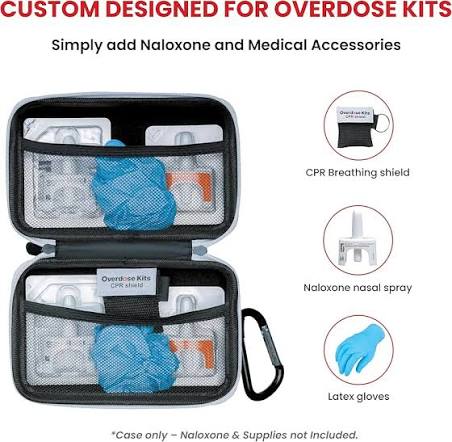 NY Workplace Naloxone Rule: What Changes on 13 December 20262026/10/19
New York's workplace naloxone requirement takes effect 13 December 2026. What the proposed rules require, who is covered, and what to do now.
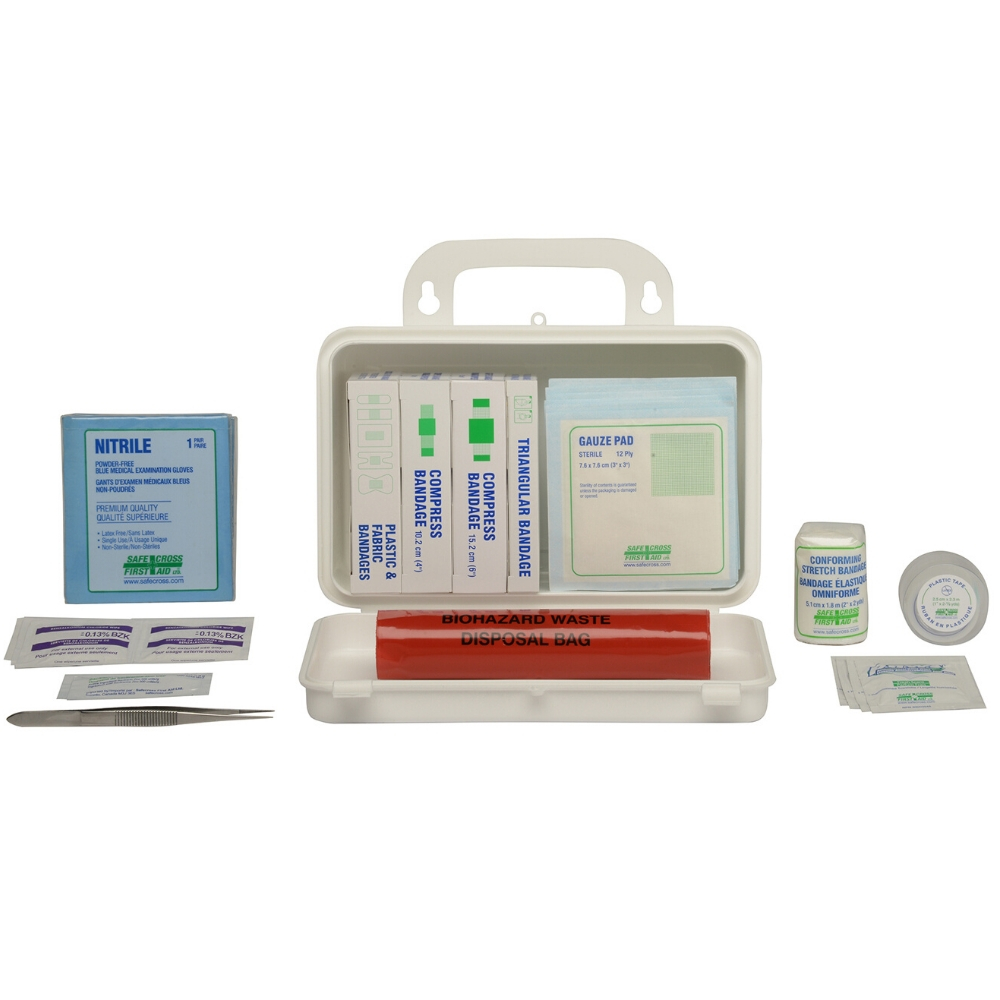 Canada Federal First Aid Kit Rules: CSA Z1220 Proposal2026/10/19
anada proposes replacing federal first aid kit content lists with CSA Z1220 across five OHS regulations, covering 20,738 workplaces. Comment deadline: 2 November 2026.