


Call Us
+86-19518020980
Email Us
chloe@kebonfirstaid.com

How to Choose a First Aid Kit Manufacturer in China: The 2026 Buyer's Guide for Importers & Brands
**How to Choose a First Aid Kit Manufacturer in China: The 2026 Buyer's Guide for Importers & Brands**
Sourcing first aid kits from China can be one of the most profitable — and one of the most dangerous — purchasing decisions a brand makes. The market is growing steadily: global sales are projected to climb from roughly USD 226 million in 2026 to USD 282 million by 2030, a compound annual growth rate of 5.6%, with North America alone accounting for more than a third of demand. Yet behind those numbers sits an uncomfortable truth: in the US, the EU and the UK, first aid kits are not optional products. They are required by law in workplaces, vehicles and public facilities — which means the buyer is responsible for the kit's compliance, not the seller.
A cheap first aid kit can be the most expensive one you ever buy — if it arrives incomplete, mislabeled, or with contents that expire in six months. This guide is written from the factory floor: what importers and brands actually need to check before signing a contract with a Chinese first aid kit supplier, which certifications matter in which market, and the questions most buyers forget to ask.
### 1. Why choosing a first aid kit manufacturer is harder than it looks
Unlike T-shirts or phone cases, a first aid kit is a medical product carrying a life-safety responsibility — and it is regulated as one, even when it is sold through Amazon or a retail chain. That creates three complications most importers underestimate:
**Compliance is multi-layered.** The kit, its individual contents, and your factory may each face different rules in different countries. A kit that is perfectly legal in Germany can fail at customs in the United States, and vice versa.
**Contents have a shelf life.** Bandages, antiseptics, gloves and hemostatic agents all expire. Industry surveys suggest that a surprisingly large share of first aid kits on the market do not meet the regulatory requirements of their destination country — often because of expired, missing or substituted components.
**You cannot see what you are buying.** Piece counts are easy to inflate with cheap trinkets. Two kits with identical "50-piece" labels can differ in real value by a factor of three — and you will only discover the difference when someone opens the kit in an emergency.
That is why choosing the right supplier is a strategic decision, not a procurement formality. The rest of this guide walks you through it step by step.
### 2. Step 1: Map your target market's compliance requirements first
Before you compare quotes, decide where the finished kits will be sold. Each market has its own rules, and the factory you choose must be able to document them:
**United States & Canada.** Workplace first aid kits must meet OSHA 29 CFR 1910.151 and ANSI/ISEA Z308.1-2021 (Classes A, B and C). Many kits and their medical contents are also subject to FDA establishment registration and device listing, or must be labeled accordingly. In Canada, workplace requirements are set by provincial OHS regulations, with CSA Z1220-17 as the recognized standard for kit contents.
**European Union.** Medical first aid products fall under the MDR (EU) 2017/745; most conventional first aid kits qualify as Class I devices and require CE marking, with technical documentation and a declaration of conformity. The EU is also phasing in UDI labeling for traceability, so batch-level documentation matters.
**United Kingdom.** Since Brexit, the UK requires UKCA marking alongside CE recognition during the transition period. Workplace kits additionally need to follow the Health and Safety (First-Aid) Regulations 1981 and BS 8599-1.
**Germany, Middle East & beyond.** Germany enforces DIN 13157 (workplace) and DIN 13164 (vehicle) standards, and a DIN-compliant kit is mandatory equipment in many cars. GCC markets such as the UAE and Saudi Arabia generally accept CE marking or require country-of-origin certificates and compliant labeling for customs clearance.
The practical takeaway: ask every candidate factory, "Which of these do you already export to, and can you show me the certificates and shipping documents?" A factory that can demonstrate shipments to your target market has already solved most of your compliance homework. If you are importing into the US, EU/UK or Canada, make ISO 13485:2016, CE, FDA registration and UKCA marking part of your minimum screening criteria from day one.
### 3. What makes a good first aid kit? Content quality beats piece count
Here is a question too few buyers ask: what actually makes a good first aid kit? In our experience supplying kits for over five years, the answer has nothing to do with how many pieces are inside the box.
**The critical components matter most.** In a genuine emergency, three or four items save lives: a quality tourniquet, hemostatic (bleeding-control) dressings, chest seals for penetrating wounds, and a CPR mask or shield. A kit stuffed with 80 tiny adhesive bandages but no real trauma gear looks impressive on the shelf and fails when it matters. Check what the trauma-level contents are, who manufactures them, and whether they carry their own certifications.
**Materials must be the ones you specified.** This is the classic substitution trap. You agree on nitrile gloves and latex-free bandages; the factory quietly sources cheaper alternatives to protect its margin. Latex allergies make this a genuine liability issue, not a cost issue. A reliable supplier documents its component sourcing and keeps batch records, so substitutions are traceable and preventable.
**Packaging and labeling are legal documents.** In most markets, the label must state the kit's contents, languages, and — for medical items — expiry dates. Multi-language labels for export are a sign of a factory that understands compliance rather than a factory that just stitches bags.
**Refillability is a business model.** Fact.MR's analysts note that institutional buyers are shifting from one-time kit purchases toward "compliance + refill + management" service models. Kits with organized compartments and available refill packs create repeat orders — which is exactly why smart importers choose manufacturers who can supply refills, not just the initial box.
### 4. The 10-point checklist: how to screen a first aid kit supplier
Use this checklist when you evaluate any factory. It covers the failures that actually destroy importer businesses:
1. **Certifications that match your market.** Ask for copies of ISO 13485:2016 (the medical-device quality management standard), CE certificates, FDA registration, UKCA — and check that the legal entity on the certificate matches the company you are paying. Roughly 30% of Chinese factories hold ISO 13485; it is a genuine differentiator, not a box-ticking exercise.
2. **Real factory, not a trading company.** Trading companies can be legitimate, but they add a layer of risk: certificates do not land in your name, and quality disputes become a game of ping-pong between the trader and the factory. Ask for a live video tour, a business license, and photos of production lines. A genuine manufacturer will happily show you the floor.
3. **Incoming material control.** Ask how the factory inspects raw materials and components on arrival. Uncontrolled inputs are the root cause of "the second batch looked different" complaints.
4. **Component quality and sourcing.** Who makes the gloves, bandages, and hemostatic agents inside the kits? Are they certified? Can the factory provide documentation for the contents, not just the outer bag?
5. **ODM/OEM capability.** If you are a brand, you will need more than assembly: custom kit configurations, case design, logo printing, packaging and instruction manuals. Check whether design and tooling are in-house or outsourced — it affects your lead time and minimum order quantity.
6. **Communication and response speed.** In B2B sourcing, response time is a proxy for how you will be treated after you pay. Leading factories respond to inquiries within 4–5 hours during business days. If a salesperson goes silent before the order, imagine them after.
7. **Transparent MOQ and tooling costs.** A serious factory publishes its MOQ and explains tooling/mold costs up front. Watch out for quotes that are silent on mold fees and surface them only after you commit.
8. **Realistic lead times.** Industry norms: 20–30 days for ODM production, 30–40 days if custom colors are involved, 60–90 days for fully custom molds — plus 20–35 days of sea freight. And plan around Chinese New Year, when the whole supply chain slows for 3–5 extra weeks.
9. **Pre-shipment inspection.** Insist on an AQL-based pre-shipment inspection with a photo report, or a third-party inspection service. Do the math: skipping a few hundred dollars of inspection on a container of 1,000 kits is a poor trade against a rejected, non-compliant shipment.
10. **After-sales support.** Ask about defective-rate handling, spare parts and reorder terms. In this industry, the reorder rate is the real test of trust — leading manufacturers retain 20–46% of customers through repeat orders.
### 5. Five red flags to walk away from
If you see any of these, keep looking:
**"We deliver in 15 days."** For anything but a stock item, this usually means the factory plans to substitute contents, rush your quality checks, or pull from another supplier's inventory without telling you.
**A price far below the material cost.** Every kit has a floor price set by its real components. A quote that beats all others by 30% is not a bargain; it is a kit full of problems.
**The certificate name does not match the company you are paying.** Certificates are issued to legal entities. If the ISO certificate belongs to "Company B" while you contract with "Company A," your compliance documentation will not survive an audit.
**Refusal to allow inspection.** No video tour, no third-party inspection, no photos of the production line. Legitimate factories invite scrutiny; only problematic ones fear it.
**No batch or expiry management.** If the factory cannot tell you the production date and lot number of each kit, you are buying untraceable medical products — a liability in every regulated market.
### 6. From purchase order to port: a realistic China sourcing timeline
Here is what a typical ODM project looks like when the clocks are honest:
- **Week 0–2:** Inquiry, specification confirmation, samples. Most serious factories send pre-production samples within 7–10 days of confirming your configuration.
- **Week 2–4:** Sample approval, order confirmation, deposit payment, tooling or material preparation.
- **Week 4–8:** Production. For a standard ODM kit with confirmed materials, expect roughly 30 days of manufacturing for typical order sizes.
- **Week 8–9:** Pre-shipment inspection, packing, booking.
- **Week 9–13:** Sea freight to the US, Europe or the Middle East (20–35 days depending on the port).
Add 3–5 weeks if your order overlaps Chinese New Year (late January to February), and 30–40 extra days for custom molds or new case designs. A good supplier will put this schedule in writing so both sides plan against the same calendar.
### 7. Why Kebon Healthcare? Inside our factory in Yiwu
Every guide like this eventually has to answer the question: who do we trust with our money? So let us introduce ourselves — transparently, from the inside.
Yiwu Kebon Healthcare Co., Ltd. is a first aid kit manufacturer based in Yiwu, China, the world's largest distribution hub for small commodities. That location matters for our customers: raw materials, packaging components and export logistics all sit within one supply-chain ecosystem, which keeps our costs honest and our lead times predictable.
Our factory employs about 100 people across a 5,000-square-meter production facility, and we have spent more than five years manufacturing first aid kits for importers, distributors and brands worldwide. Our quality system is certified to ISO 13485:2016, and our products carry CE marking, FDA registration and UKCA marking — the compliance package your US, EU and UK sales channels will ask for. We export to North America, Europe, the Middle East and beyond, and we are happy to show certificates, production photos or a live video tour to any serious buyer.
We build across the full product matrix, so a single supplier can cover your entire first aid program: [military tactical backpacks and trauma carriers](https://www.kebonhealthcare.com/military-tactical-backpacks), [pet first aid kits](https://www.kebonhealthcare.com/pet-first-aid-kit), [EVA first aid kits](https://www.kebonhealthcare.com/eva-first-aid-kit), [home and industrial first aid kits](https://www.kebonhealthcare.com/home-and-industrial-first-aid-kit), [roadside safety kits](https://www.kebonhealthcare.com/roadside-safety-kit), outdoor kits and mini gift kits. If you need private label first aid kits under your own brand, we handle logo printing, custom packaging, custom contents and even case customization through our ODM team.
Two numbers buyers ask about most: our MOQ is 500 pieces per model, and standard production takes around 30 days. We respond to inquiries within 24 hours — usually much faster — and we welcome factory audits, whether you visit Yiwu in person or arrange a third-party inspection.
**Want to check whether we fit your product plan?** [Send us your inquiry](https://www.kebonhealthcare.com/message.html) and attach your target market and desired kit configuration — we will come back with a compliance-first recommendation, not just a price.
### 8. FAQ: first aid kit MOQ, lead time, OEM and more
**What is Kebon's minimum order quantity (MOQ)?** Our standard MOQ is 500 pieces per model. For private label and ODM projects, the MOQ depends on your configuration — custom packaging and case tooling usually require a higher quantity, which we will confirm during quoting.
**How long does production take?** Around 30 days for a standard ODM order after sample approval. Pre-production samples typically take 7–10 days. Add time for custom molds, custom colors, or orders placed around Chinese New Year.
**Do you offer OEM/ODM and private label?** Yes. We produce white-label and private label first aid kits with your logo, packaging and contents configuration. Our ODM team supports custom case design, custom kit contents and multilingual labeling.
**Can you send samples before I order?** Yes. We recommend ordering pre-production samples after confirming your configuration, so you can verify contents, quality and labeling before mass production. Sample costs are discussed upfront and, for serious orders, can be credited against your first purchase.
**Do you support factory audits and inspections?** Absolutely. We welcome in-person visits to our Yiwu factory and can arrange video tours for overseas buyers. Third-party pre-shipment inspections are standard practice on our orders.
**Which markets do you export to, and can you meet my country's requirements?** We regularly export to North America, Europe, the Middle East and Asia, with ISO 13485:2016, CE, FDA and UKCA documentation supporting those shipments. Tell us your destination market in your inquiry, and we will confirm compliance requirements before you commit.
### Ready to source with confidence?
Choosing a first aid kit manufacturer in China does not have to be a gamble. Screen suppliers against real compliance requirements, verify what is actually inside the kits, and work with a factory that lets you inspect every step of the process — from certificate to container.
At Kebon Healthcare, that is how we have built our business, one repeat order at a time.
Send Inquiry



X
We use cookies to offer you a better browsing experience, analyze site traffic and personalize content. By using this site, you agree to our use of cookies.
Privacy Policy
News
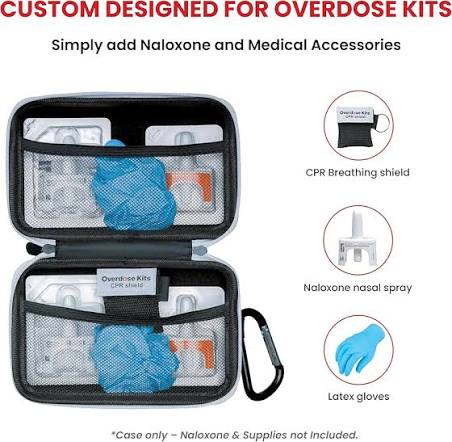 NY Workplace Naloxone Rule: What Changes on 13 December 20262026/10/19
New York's workplace naloxone requirement takes effect 13 December 2026. What the proposed rules require, who is covered, and what to do now.
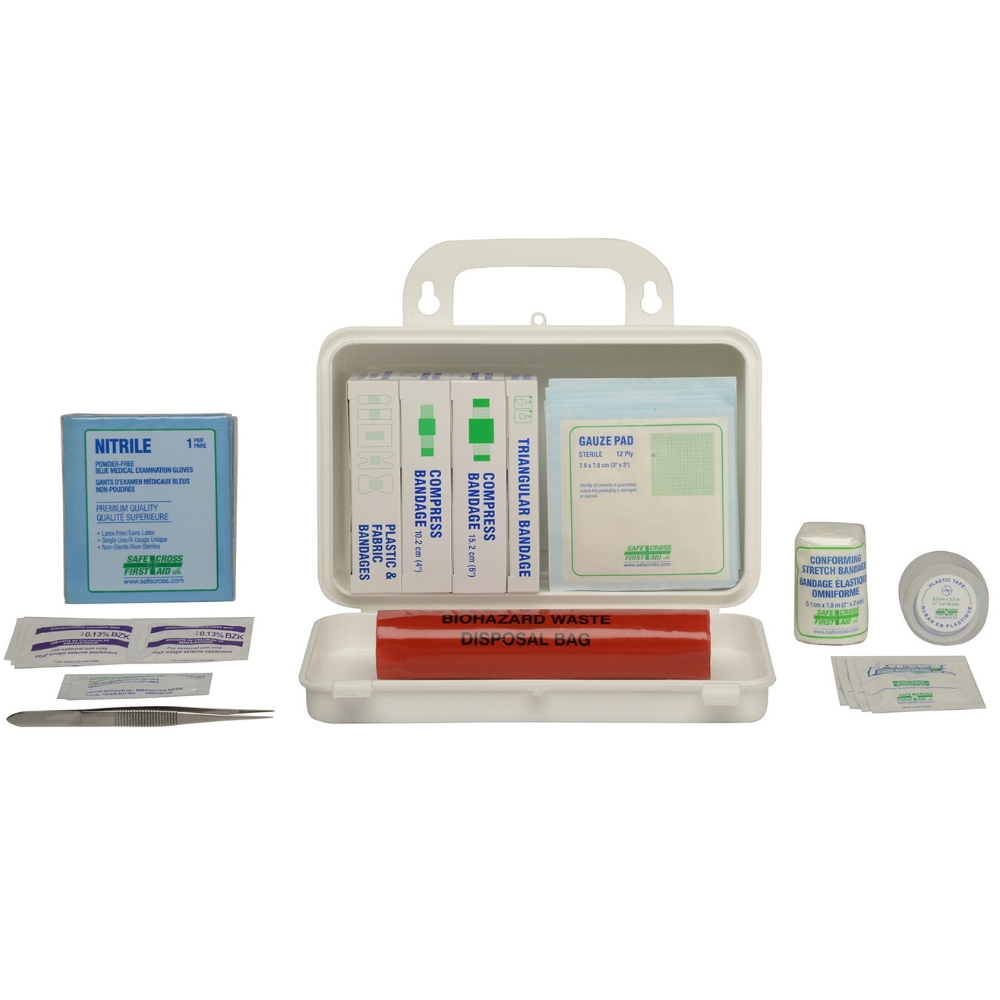 Canada Federal First Aid Kit Rules: CSA Z1220 Proposal2026/10/19
anada proposes replacing federal first aid kit content lists with CSA Z1220 across five OHS regulations, covering 20,738 workplaces. Comment deadline: 2 November 2026.