


Call Us
+86-19518020980
Email Us
chloe@kebonfirstaid.com

Shipping First Aid Kits to the Middle East in 2026
Shipping First Aid Kits to the Middle East in 2026: Freight Pressure, Transit Times and Smarter Order Planning
For years, sourcing conversations with Middle East buyers followed a familiar rhythm: price, MOQ, lead time, done. In 2026, that rhythm has changed. The first question many of our Gulf customers ask now is not about the product at all — it is about getting it there.
If you import first aid kits into the Gulf region, you already know why. Freight to the Middle East has moved from a line item you could estimate to a variable that can swing your entire landed cost. Routes have shifted. Transit times have stretched. And the traditional assumption that "sea freight is cheap and reliable" no longer holds for every lane into the region.
This article is about the practical side of that reality: why Middle East shipping is under pressure in 2026, what it means for how you order first aid kits, and the specific moves importers are using to control costs without running their shelves empty.1. Why the Middle East lane is under so much pressureThree structural factors are squeezing container shipping into the Gulf region right now, and none of them resolve quickly.
Container traffic through the Strait of Hormuz has been effectively closed for an extended period. The strait has historically been the main water gateway for containerised cargo into the Gulf. With container services unable to transit it, the market has re-routed around it — which brings us to the next factor.
Land-bridge and alternative-port routes have become permanent, not temporary. Cargo now flows into the region through alternative gateways, notably Jeddah on the Red Sea side and Khor al Fakkan on the Gulf of Oman side, then moves onward by road. These routes work — but they were built as emergency alternatives, and they carry emergency pricing. Capacity is finite, demand is not, and the result is a lane where rates have stayed stubbornly, historically high even as other trade lanes have softened.
Red Sea capacity is returning, but only slowly and selectively. Container capacity transiting the Bab el-Mandeb strait improved noticeably this year compared with last — but it still sits far below pre-crisis volumes. Carriers are returning selectively: some services on some legs, some with written reversibility clauses that allow a rapid pivot back to the longer route around the Cape of Good Hope. The good news is real: a Red Sea routing can meaningfully shorten transit times for cargo headed into the Mediterranean and beyond. The complication is that routing decisions can change with short notice, service by service.
The net effect for importers: unpredictability, not just high cost. Two shipments of identical kits, booked weeks apart, can arrive on very different schedules at very different costs.2. What this actually does to a first aid kit orderFirst aid kits have a specific freight profile that makes this environment harder for them than for many products:
They are bulky relative to their value. A carton of first aid kits is mostly air and packaging. Measured by volume — which is how container space is priced — kits are far less freight-efficient than electronics or tools of similar value. When rates rise, bulky-light cargo feels it most.
They are often multi-SKU orders. A distributor's order might include workplace kits, vehicle kits, pet kits and refills in one shipment. Every additional configuration adds packaging inefficiency and container space.
They are time-sensitive in a specific way. Consumables inside kits have expiry dates. A shipment that spends extra weeks in transit or waiting at a transshipment port does not just cost you freight — it costs you usable shelf life and it delays your selling season.
The demand keeps coming. Emergency and workplace first aid is a compliance-driven, non-discretionary purchase. Middle East demand has not softened because freight rose; if anything, industrial safety regulation in the region keeps expanding the buyer base. So importers cannot simply wait out the market — they have to adapt how they order.3. Seven practical moves importers are using right now1. Optimise packaging volume, not just unit price. When freight is your biggest cost variable, cubic metres matter more than almost anything else. Ask your factory for a carton optimisation review: can the same kit ship in a smaller box, with less void space, or in vacuum-compressed soft packs? A modest reduction in carton volume applied across a container translates directly into more kits per shipment. This is one of the most underused cost levers in our industry — and the simplest to act on, because it requires no change to the product itself. Ask for carton dimensions together with your quote, not after your order.
2. Order more frequently, in smaller quantities. The classic "big container, best price" logic assumes cheap freight and predictable transit. In today's Middle East lane, a smaller, more frequent ordering pattern can beat a giant annual order: less capital tied up, less exposure per shipment, faster reaction to your own customers' demand. This works well with a supplier who keeps MOQ accessible — ours sits at 500 pieces per model for exactly this reason.
3. Mix and consolidate shipments. If you buy multiple product lines, consolidate them into one shipment rather than three. Our Yiwu location is a practical advantage here: we are a single production and consolidation point for workplace kits, roadside safety kits, pet first aid kits, EVA first aid kits and tactical ranges, so you are not combining cargo across five suppliers before it reaches port.
4. Plan your order calendar around the calendar, not around the market. Chinese New Year shuts down production capacity for an extended period; regional peak seasons compress available vessel space. Work backwards from your selling season and place orders so that production finishes before the crunch — not during it. Our standard production runs about 30 days, which makes this kind of planning realistic rather than theoretical.
5. Use sea freight for your base inventory and air freight selectively. Air freight is not a strategy for a full-year programme — but for urgent replacement of a stockout SKU, or for high-value compact items, a targeted air shipment can protect a customer relationship that a late container would damage. Decide in advance which SKUs justify that treatment.
6. Understand your Incoterms and what you are actually buying. Under FOB, freight volatility lands on you; under CIF or DDP, the supplier quotes a delivered number that includes their freight assumptions. Neither is automatically better — but if you choose a delivered term, ask exactly which routing and what validity period the quote assumes, and get the answer in writing. A delivered quote with a short validity window is not protection; it is a deferred surprise.
7. Build a buffer into your promises. If your own customers are downstream (distributors, retailers, employers stocking cabinets), your delivery promises to them should carry the same uncertainty the lane does. A slightly conservative delivery window that you beat is a better customer experience than an optimistic one you miss.4. The part your supplier controlsSome of this is in your hands — how you order, how you consolidate, what you promise. Some of it is on our side of the table, and we take that seriously.
At Yiwu Kebon Healthcare, the Middle East is one of our core export regions. What that means in practice for Gulf-bound orders:Volume-aware packaging. We review carton dimensions and void space with customers shipping to high-freight lanes, because we know that saving cubic metres is the fastest route to a better landed cost.Flexible order sizing. 500-piece MOQ per model and roughly 30-day production let you run the smaller, more frequent ordering pattern that today's Middle East lane rewards.Consolidation support. Multiple product lines, one shipment, one set of export documents — coordinated from our Yiwu base.Certification-backed products. Our quality system is certified to ISO 13485:2016, with CE, FDA registration and UKCA marking on applicable products, so your goods clear customs without compliance drama adding days to the journey.Fast, complete quoting. Send us your configuration and destination port, and we will respond within 24 hours with pricing, carton specs and a realistic production schedule.Shipping into the Gulf and want to cut your cubic metres? Send us your product list and destination — we will come back with carton-level shipping specs alongside your quote, so you can model the real landed cost before you commit.5. FAQ: Middle East shipping and first aid kit sourcingIs it a bad time to place a new order into the Gulf? Not necessarily — the products sell regardless of freight, and waiting has its own cost: your customers buy from whoever has stock. The more relevant question is order sizing and timing, not whether to order at all.
Should I switch to a supplier closer to the Middle East? There is no significant alternative manufacturing base for first aid kits in the region at meaningful scale, and the drivers behind today's freight environment are structural rather than supplier-specific. The global production base remains concentrated in Asia, with China the dominant producer by a wide margin.
Will freight come down soon? Red Sea capacity is slowly returning and alternative routes are maturing, which should ease pressure over time — but the trend has been uneven, and forecasts in this lane have been wrong in both directions. Plan for the current environment rather than for a hoped-for normal.
How do I reduce shipping cost without reducing quality? Ship the same kit in less volume. Packaging optimisation, carton re-engineering and consolidation reduce freight per unit without touching what is inside the kit. That is the lever we recommend reviewing first with every Gulf customer.
Can you supply smaller orders while freight is high? Yes — our MOQ is 500 pieces per model, and we are set up for repeat, consolidated ordering patterns rather than one-time mega-orders.Freight will move. Your supply plan does not have to.The importers navigating this market well are not waiting for freight to normalise. They are shrinking cartons, splitting orders, consolidating shipments, and being honest with their own customers about timing. Those are decisions you can make this quarter.
Get a quote within 24 hours → Tell us your destination port and configuration, and we will send pricing together with the carton specifications you need to calculate the real landed cost. You can also reach our team through our contact page.
Send Inquiry




X
We use cookies to offer you a better browsing experience, analyze site traffic and personalize content. By using this site, you agree to our use of cookies.
Privacy Policy
News
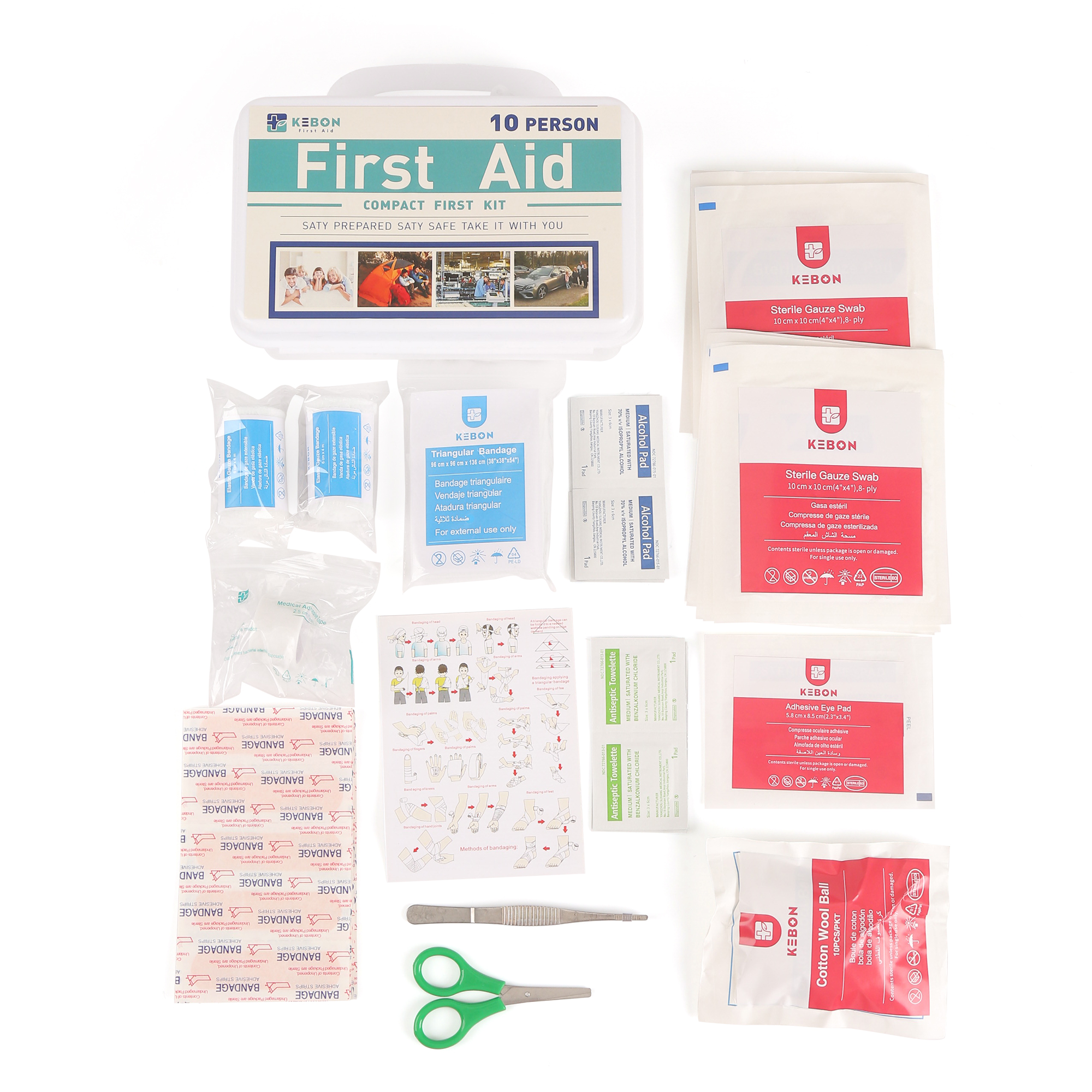 Why "Missing Items" Drive First Aid Kit Returns2026/09/22
"Missing items" and "small size" are the top complaints in online first aid kit reviews. Here is how private label sellers can spec kits that earn 4.8 stars.
 UKCA or CE? UK Medical Device Rules for First Aid Kits2026/09/22
UK medical device rules are shifting again. What CE and UKCA really require for first aid kits in 2026, the 2028/2030 deadlines, and what to do now.