


Call Us
+86-19518020980
Email Us
chloe@kebonfirstaid.com

Iran-Israel Conflict Enters 100th Day, Inflicting Severe Damage on Global Trade and Economy
FOR IMMEDIATE RELEASE
Iran-Israel Conflict Enters 100th Day, Inflicting Severe Damage on Global Trade and Economy
WASHINGTON, D.C. – June 23, 2026 – Nearly 100 days since the outbreak of the US-Israeli military operation against Iran on February 28, the conflict continues to exact a heavy toll on international trade, global supply chains, and the world economy. The paralysis of the Strait of Hormuz—one of the most critical maritime chokepoints for global energy and commodity flows—has triggered what the International Energy Agency (IEA) has described as the largest supply disruption in the history of the global oil market
Strait of Hormuz: A Chokepoint Under Siege
The Strait of Hormuz, a narrow 100-mile waterway linking the Persian Gulf to international markets, has seen commercial vessel traffic plummet by over 90% since the conflict began. Prior to the war, an average of 129 vessels transited the strait daily. In the first 100 days of conflict, however, only approximately 988 commercial ships managed to pass through—a volume the waterway would have handled in a single week under normal conditions. On some days, traffic dropped to as few as two vessels.
The situation has worsened in recent days. On June 20, Iran's Islamic Revolutionary Guard Corps announced the renewed closure of the strait, citing Israeli military operations in Lebanon. Shipping traffic fell sharply, with only five vessels passing through on June 21 compared to 26 the previous day, according to maritime analytics firm Kpler. The United States has disputed Iran's claim, asserting that the waterway remains open.
Energy Markets in Turmoil
The disruption has sent shockwaves through global energy markets. Around 20% of global oil and liquefied natural gas (LNG) trade normally transits the Strait of Hormuz. Gulf oil producers affected by the closure are now producing 14.4 million barrels per day less than before the war. More than 1.2 billion barrels of supply have been affected since the conflict began.
Brent crude is now trading approximately 30% above pre-war levels, with prices reaching as high as $97 per barrel at certain points. Fitch Ratings has raised its average Brent crude forecast for 2026 from $70 to $87 a barrel. European gas prices are 50% higher due to supply constraints, while fuel costs for ships have surged 59%. The IEA expects global oil supply in 2026 to remain, on average, 3.9 million barrels per day lower, even if shipping through the strait gradually resumes.
Beyond Oil: Fertilizers, Plastics, and Food Security
The impact extends far beyond hydrocarbons. Approximately 30% of global fertilizer trade, 40% of urea supply, 50% of sulfur supply, and 30% of phosphate supply have been affected by the disruption. About 33% of the world's fertilizers—including sulfur and ammonia—transit through the Strait of Hormuz. "There are no viable alternatives" to shipping in the Gulf, Kpler noted in a June analysis, as land routes are limited by pipeline and trucking capacity.
The World Trade Organization (WTO) has warned that the disruption of fertilizer shipments through the strait has not only reduced petroleum flows but also limited fertilizer supply and raised costs, increasing short- and long-term pressures on food security. The Gulf region, including Bahrain, Qatar, and Saudi Arabia, exports significant quantities of urea and ammonia, with around one-third of global supply passing through the strait.
The conflict also threatens major polymer exports from the United Arab Emirates, which produces up to 23 million tons of polyethylene annually—representing 15% of global production. Several major shipping companies, including Maersk and CMA CGM, have suspended transits through both the Strait of Hormuz and the Suez Canal, forcing vessels to circumnavigate Africa—a detour of several thousand kilometers.
Ripple Effects Across Supply Chains
The lithium-ion battery supply chain—critical for electric vehicles and energy storage—has emerged as a significant casualty. While Iran is not a major supplier of battery materials, the disruption of the Strait of Hormuz has driven up energy and logistics costs, turning the war into a financial stress test for the entire battery supply chain, from mining and refining to manufacturing. Gas-fired energy generation costs for battery manufacturing in Germany have risen by nearly 50%.
BASF CEO Martin Brudermüller recently warned that high inflation compounded by the conflict is disrupting the global supply chain, which faces the risk of rupture, putting pressure on the automotive industry and the overall economic outlook.
Economic Growth Forecasts Slashed
International institutions have sharply revised their global economic projections. The Organization for Economic Cooperation and Development (OECD) estimates that if the war is short-lived, global growth could drop from 3.4% in 2025 to 2.8% in 2026—a slowdown translating to a potential loss of at least $700 billion for the global economy. If disruptions persist, global economic growth could weaken to as low as 2.1% this year and 1.8% in 2027.
Fitch Ratings has lowered its global economic growth forecast for 2026 by 0.2 percentage points to 2.4%, citing the oil crisis. The OECD projects global trade growth will fall from 5% in 2025 to 3.1% in 2026. The WTO warned that sustained high oil prices related to the conflict could shave 0.5 percentage points off merchandise trade growth in 2026.
The World Bank expects global energy prices to rise 24% in 2026, with overall commodity prices projected to increase 16%. Global inflation is expected to reach 4.4% in 2026, significantly deviating from the recent disinflation trend. Developing economies face a heavier burden, with inflation forecast to average 5.1%. "The poorest people, who spend the highest share of their income on food and fuels, will be hit the hardest," the World Bank noted.
Shipping Disruption and Stranded Vessels
The paralysis of the strait has left hundreds of commercial ships and approximately 20,000 seafarers stranded in the Persian Gulf. Several port facilities have been affected: the Emirati port of Jebel Ali, central to petroleum derivative exports, caught fire, while a Kuwaiti port facility temporarily suspended operations after debris fell nearby.
Insurance rates for ships transiting the Middle East have increased significantly, making navigation in the Gulf "prohibitively expensive or impossible for cargo ships," according to Armateurs de France, a shipowners association. The association reported that 60 French-flagged vessels are currently stranded in the Gulf.
Outlook Remains Uncertain
The Strait of Hormuz, where trade has been largely halted for 14 weeks, is not expected to reopen until July at the earliest, according to Fitch. However, the renewed closure announced on June 20 has injected further uncertainty into already volatile markets.
WTO Director-General Ngozi Okonjo-Iweala emphasized that "the baseline forecast is under pressure from the conflict in the Middle East," adding that sustained increases in energy prices could increase risks for global trade, with potential spillovers for food security and cost pressures on consumers and businesses. She stressed that WTO members can help cushion the impact by maintaining predictable trade policies and strengthening supply chain resilience.
"A prolonged conflict could keep transport and fuel costs structurally elevated, disrupt key shipping and air routes, and weigh on regional tourism and global travel demand," the WTO warned. OECD Secretary-General Mathias Cormann cautioned: "The longer the disruptions last, the larger the economic and social costs become".
Yiwu kebon healthcare company
Chloe@kebonfirstaid.com
Send Inquiry




X
We use cookies to offer you a better browsing experience, analyze site traffic and personalize content. By using this site, you agree to our use of cookies.
Privacy Policy
News
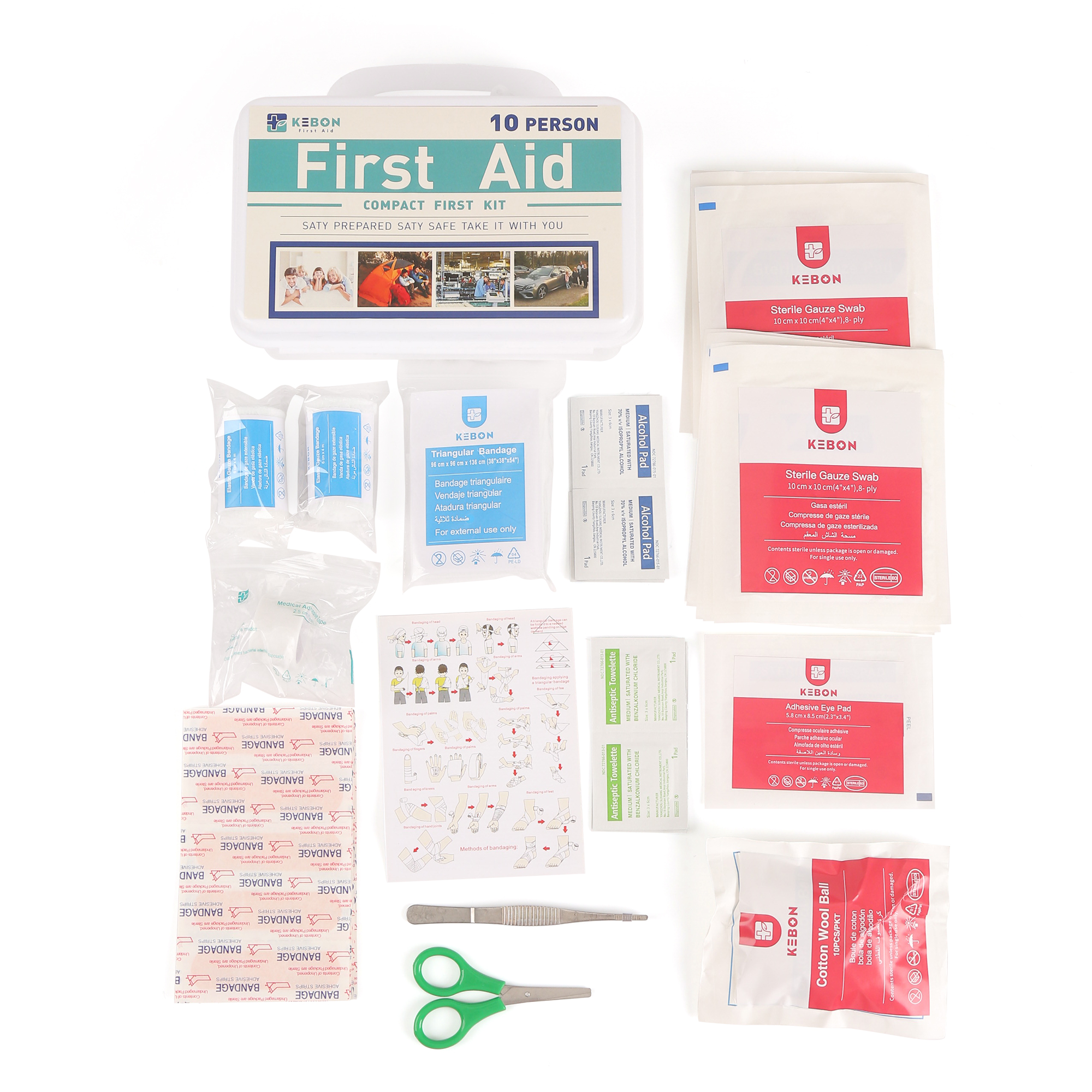 Why "Missing Items" Drive First Aid Kit Returns2026/09/22
"Missing items" and "small size" are the top complaints in online first aid kit reviews. Here is how private label sellers can spec kits that earn 4.8 stars.
 UKCA or CE? UK Medical Device Rules for First Aid Kits2026/09/22
UK medical device rules are shifting again. What CE and UKCA really require for first aid kits in 2026, the 2028/2030 deadlines, and what to do now.