


Call Us
+86-19518020980
Email Us
chloe@kebonfirstaid.com

France Pharmacy Rules 2026: First Aid Kit Assortment Guide
In early November, the French health ministry issued a new order replacing the long-standing list that governs which products pharmacists may advise on, dispense and sell in French pharmacies. The order establishes an exhaustive catalogue of permitted categories — medicines, certain medical devices, hygiene products, diagnostics, protective equipment and more — and, tucked into its limits, a line that matters enormously to anyone selling first aid kits into France: first aid kits containing human medicines are excluded from what pharmacies may sell.
Read that carefully, because the wording matters. It is not first aid kits that are excluded — it is specifically kits whose contents include human medicines. A well-constructed, device-only first aid kit remains squarely within the pharmacy's permitted assortment. But the moment a kit contains painkillers, antihistamines, antiseptic solutions classified as medicines or anything else regulated as a human medicinal product in France, it steps outside the pharmacy channel entirely.
For a category that has historically leaned on pharmacy distribution as a trust channel — and for importers and brands who assemble "everything in one box" kits that casually include a blister of paracetamol — this is a genuine assortment-shaping event. In this article we unpack what the new order does, why the medicine-containing kit exclusion exists, what it means for different retail channels in France and the wider EU, and how we as a manufacturer are helping customers redesign their French and European assortments around it.
What the New Order Actually Changes
The order, issued at the proposal of the national pharmacists' council, replaces a list that dated back to 2002. Nearly a quarter of a century of product evolution — digital health devices, new diagnostics, a much wider consumer wellness market — had been squeezed through interpretive patches on the old text. The new order responds with an exhaustive list: if a category is not on it, a pharmacy may not advise on or sell it.
For our readers, two features of the new list stand out. First, individual medical devices, hygiene products, protective equipment and diagnostic devices are all explicitly permitted categories — which covers the overwhelming majority of what goes into a first aid kit: dressings, bandages, plasters, antiseptic wipes classified as devices, gloves, shears, thermal blankets, splints, tourniquets, burn dressings and so on.
Second, the exclusions. Implantable devices are out — irrelevant for our category. And kits containing human medicines are out. No effective date or compliance transition was specified in the material available when the order was published, which means the practical guidance for importers is to treat the direction of travel as clear and act on assortment planning now rather than waiting for implementation detail.
It is also worth noting what the order does not do: it regulates what pharmacies may sell, not what retailers in general may sell. Supermarkets, outdoor retailers and e-commerce channels in France operate under different rules. But because pharmacies have been a cornerstone distribution channel for quality first aid products — and because the exhaustive-list logic tends to influence how other channels interpret compliance — the exclusion will shape assortment thinking well beyond the pharmacy counter.
Why Medicine-Containing Kits Are a Structurally Different Product
Step back and the exclusion makes sense. In French and EU law, a human medicine is a heavily regulated product with its own marketing authorisation regime, its own supply chain rules and its own pharmacist-mediation logic. A first aid kit that bundles a medicine is not simply a kit plus an extra item — legally, it is a product whose distribution implicates the medicine regime. That creates headaches on every axis: who is responsible for the medicine's storage conditions inside the kit, how expiry management works, who may lawfully supply it through which channel.
The regulator's answer is to separate the channels: medicines are dispensed by pharmacists under their regime; the kit — as a device-based product — belongs in the device world. Practical consequence for manufacturers: the clean, scalable European first aid kit is a device-only kit. That has been the direction of professional and institutional procurement for years — workplace kits, vehicle kits, school and municipal kits are all device-only by design — and the new French order now extends that logic explicitly into retail pharmacy.
The interesting commercial question is the consumer retail kit — the family first aid box sold with a small medicine compartment. That configuration now faces a fork in the road in France: strip the medicines and sell the kit in pharmacies, or keep the medicines and sell through non-pharmacy channels under the medicine rules, with all the extra obligations that entails.
What This Means for Importers and Brands: The Assortment Redesign
If you sell into France — or you are a French brand sourcing from China — here is the redesign playbook we are running with our customers.
Split the kit, keep the brand. The most common solution is a two-component architecture: a device-only kit body (dressings, tools, protective items) that lives happily in the pharmacy channel, paired with a separate medicine module that the pharmacy stocks under its own medicine rules, or that the consumer sources separately. The customer still buys "your brand" as the organised solution to family first aid — but the compliance boundary between the device part and the medicine part is clean and documented.
Re-examine every SKU for hidden medicines. This catches more teams than you would expect. Antiseptic solutions can be classified as medicines depending on their claims and composition in a given member state. Some throat sprays, eye washes and wound-cleaning products sit on the medicine side in one country and the device side in another. A kit that is compliant in Germany may contain an item that is a medicine in France. The redesign exercise must therefore be run country by country, item by item, against each market's classification — and this is precisely where a factory with European regulatory experience earns its keep.
Use the redesign as a quality upgrade. Stripping medicines out of a kit frees space and budget in the box. Our customers typically redeploy it where it drives perceived value: better dressings, a proper foil blanket, a quality pair of shears, better organisation. A pharmacy-grade device-only kit with superior contents is, commercially, a better product than the old everything-in-one-box — the medicine was rarely what sold the kit anyway.
Mind the labelling and claims. Without medicines in the box, the kit's instructions and marketing claims must also stay on the device side of the line — no instructions implying medicine use, no claims that position the kit as delivering medicinal therapy. Claims discipline is now part of assortment design. This includes imagery: a pack shot that prominently features a medicine blister sends a channel signal you do not want on a pharmacy-bound product. Re-shoot the retail artwork alongside the content redesign — it is the same project, and doing both at once halves the cost.
There is a timing element here too. Assortment redesigns ripple through the supply chain: new contents lists, new inserts, new packaging print, new EUDAMED registration data for the changed models. Each step takes production-cycle time. Brands that start the redesign now will have the new device-only range on French shelves well before the next seasonal reset; brands that wait for the implementation details to be fully clarified will be redesigning in a hurry next year, in the middle of a production calendar that will not slow down for them. Our advice is simple: run the classification review this quarter, freeze the new kit specification before the holiday production window, and let the factory — us, or whoever you work with — quote the change as part of your normal 2027 opening orders rather than as an emergency retrofit. Ask us about device-only kit specifications →
The Wider EU Picture: France as Trend-Setter
Is France an outlier, or a signal? Based on everything we watch in European regulation, we read it as a signal. The exhaustive-list approach — replacing decades of interpretive patches with a clear, closed catalogue — matches the broader regulatory philosophy we have covered all year, from the EU's database transparency push to the tightening of classification boundaries. Member states are modernising their distribution rules, and distribution rules increasingly favour the clean separation of device products from medicine products.
For a first aid kit importer, the strategic conclusion is to standardise on the strictest interpretation across your European assortment: design your core kit range as device-only, and treat medicine modules as country-specific add-ons managed under local rules. One architecture, deployed everywhere, beats a patchwork of country-specific kit contents that each need separate compliance files. It also aligns neatly with the database registration obligations we covered in our EUDAMED deadline article — a standardised, device-only range is far easier to register, to document and to keep consistent across label, instructions and database.
And for those selling into the UK as well, the picture rhymes: the UK's indefinite recognition of CE-marked devices — covered in our UK article — means one well-documented device-only range now travels further across Europe than it has at any point since Brexit.
How Kebon Supports the Device-Only Architecture
We build first aid kits for European brands and importers as our core business, and the device-only architecture is not a workaround for us — it is our home ground. Our product range — dressings, bandages, plasters, gloves, shears, tourniquets, thermal blankets, burn and blister care, vehicle and outdoor kits — is device-based, produced under our ISO 13485-certified quality system, with CE documentation for the European market.
Practically, that means when a customer comes to us with a French pharmacy programme, we can: build the kit contents to a device-only specification agreed with their regulatory adviser; support the classification review of every component against French rules; flag any component that risks being classified as a medicine; and deliver the kit with documentation consistent with the box contents — the consistency that both pharmacists and, increasingly, databases now make visible to the world. For customers planning 2027 assortments, we would rather have this conversation at the design stage than at the customs stage.
If you are restructuring a French or pan-European assortment, launching a pharmacy-channel kit, or simply unsure whether any item in your current kit is a device or a medicine in a given market, our team can help you think it through — alongside your regulatory adviser — before you commit to production. Discuss a device-only kit programme for your market →
Final Thoughts
Regulatory news in this category usually arrives as deadlines and databases. The French pharmacy order is different: it arrives as a shelf decision. What may sit on the pharmacy shelf, and what may not. For first aid kit brands, the message is unusually concrete — the medicine-containing kit is leaving the pharmacy channel in France, and the device-only kit is the architecture the European market is converging on.
The brands that move early will treat this as an upgrade: cleaner compliance, better contents, a pharmacy-grade product that travels across borders. The ones that move late will find their French assortment quietly unsellable in their most trusted channel. If you want to be in the first group, we should talk — this is exactly the kind of product redesign our factory does best, and the best time to start it is before your 2027 production calendar fills up. Get in touch with our team →
Disclaimer: This article is general trade commentary, not legal advice. Product classification and pharmacy distribution rules are country-specific; always confirm with your regulatory adviser or authorised representative before finalising assortment decisions.
Send Inquiry


X
We use cookies to offer you a better browsing experience, analyze site traffic and personalize content. By using this site, you agree to our use of cookies.
Privacy Policy
News
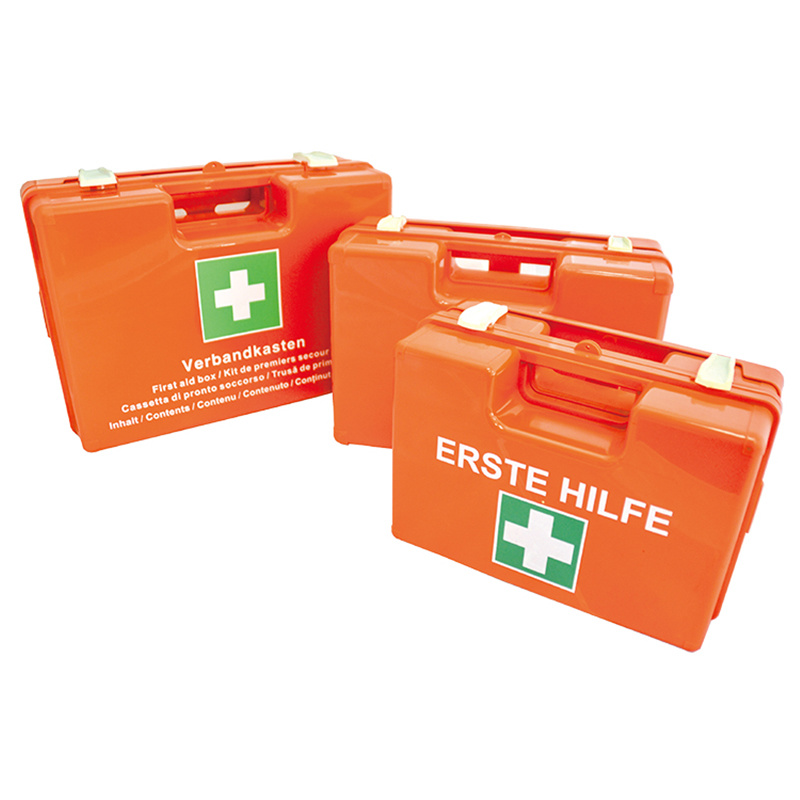 France Pharmacy Rules 2026: First Aid Kit Assortment Guide2026/11/24
A new French order rewrites what pharmacies may sell — and excludes first aid kits containing human medicines. What it means for EU kit importers and brands.
 Red Sea Return vs Mediterranean Rates: 2027 Booking Guide2026/11/24
Carriers are returning to the Suez Canal, yet Mediterranean spot rates are climbing. What the divergence means for first aid kit buyers booking 2027 shipments.